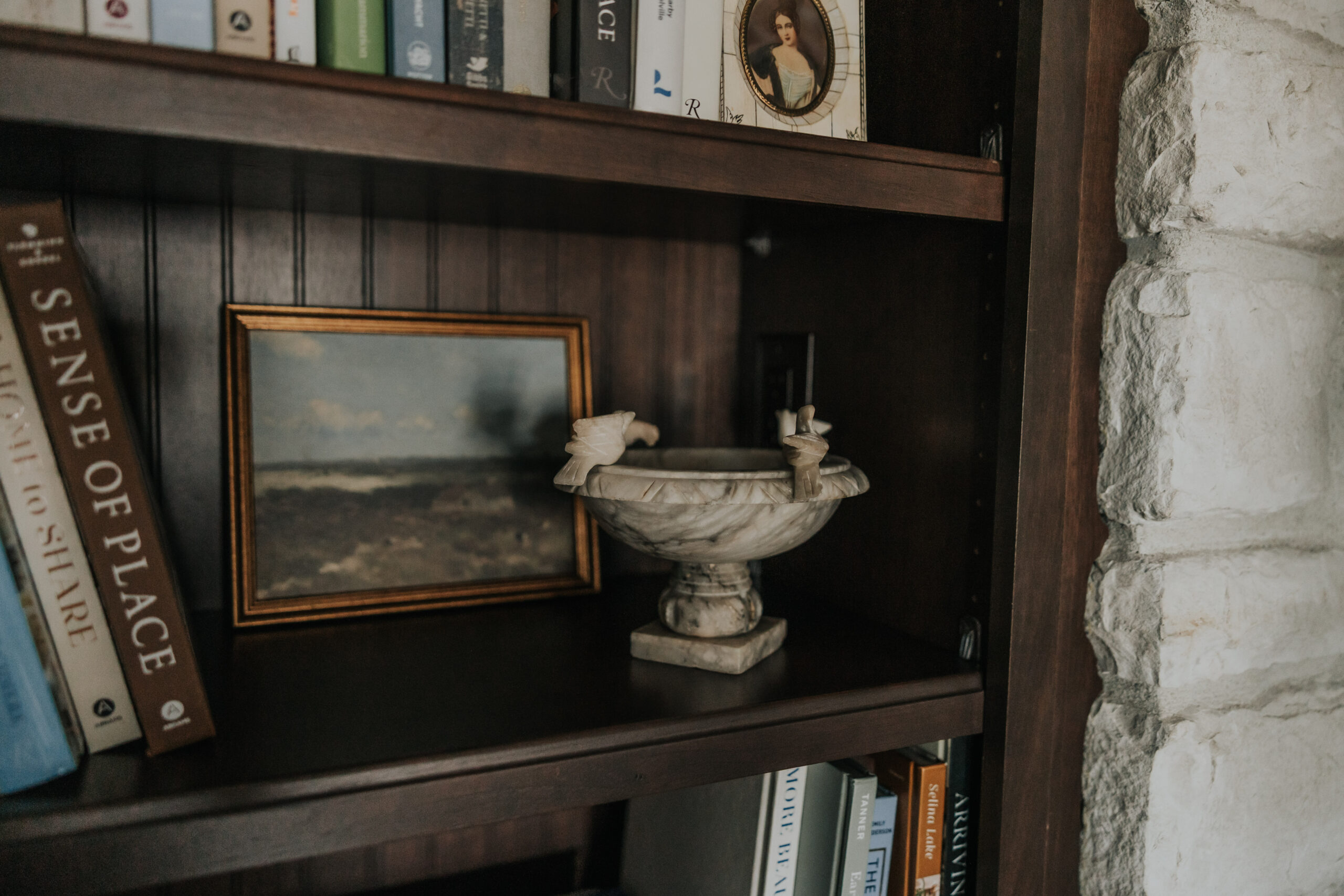
There’s a reason some homes feel instantly cozy the moment you walk in, while others—despite being beautifully decorated—feel somehow flat or unfinished. The difference almost always comes down to texture.
Texture is what transforms a room from looking nice to feeling inviting. It’s the softness of linen against the coolness of stone, the warmth of wood next to smooth brass, the visual interest of woven materials beside sleek surfaces. When you layer textures thoughtfully, you create depth, warmth, and that lived-in quality that makes a house feel like home.
This isn’t about adding more things—it’s about choosing the right mix of materials that work together to create dimension and coziness. In a cottage-inspired home, texture is essential. It’s what makes spaces feel collected, warm, and deeply personal rather than staged or sterile.
Let me walk you through how to layer textures in each room of your home, creating that cozy cottage feeling we’re all after.
Understanding Texture: Rough, Smooth, Soft, and Hard
Before we dive into specific rooms, it’s important to understand the types of textures you’re working with.
Rough textures bring organic warmth and visual interest: natural stone, unfinished wood, woven baskets, jute rugs, raw linen. These materials feel earthy and grounded.
Smooth textures create calm and elegance: polished brass, honed marble, ceramic pottery, painted surfaces. These materials bring refinement without fussiness.
Soft textures invite touch and comfort: linen towels, wool throws, velvet pillows, cotton bedding, woven lampshades. These materials make a space feel cozy and lived-in.
Hard textures provide structure and contrast: wood furniture, metal hardware, stone countertops, glass. These materials anchor a room and give it presence.
Visual texture creates pattern and depth without being tactile: patterned rugs, printed wallpaper, detailed tilework. These add dimension through design rather than touch.
The key to successful layering is mixing all of these types in every room. When everything is soft, a space feels shapeless. When everything is hard, it feels cold. Balance is what creates that perfect cottage coziness.
Great texture layering balances rough with smooth, soft with hard, plain with patterned—creating rooms that feel both grounded and inviting.
Layering Textures in the Kitchen
The kitchen is one of the best places to practice texture layering because it naturally calls for a mix of materials—both functional and beautiful.
Start with Your Foundation
Your cabinetry and countertops set the textural tone. Wood cabinetry—whether painted or stained—brings warmth and grain. Stone countertops add cool smoothness and natural variation. Even within these foundational choices, you’re already creating contrast.
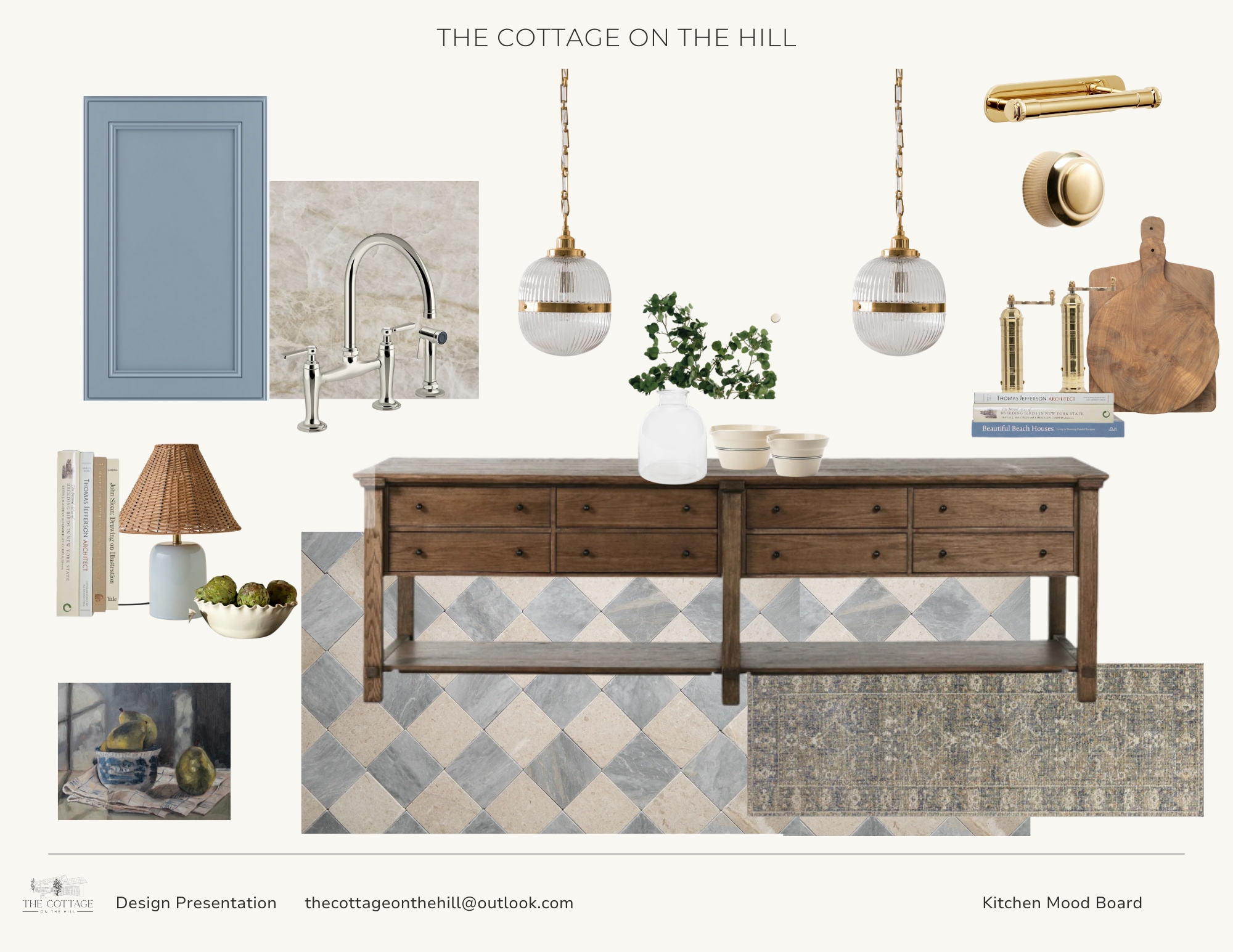
In the kitchen mood board example, the warm wood sideboard paired with light stone and blue-gray cabinetry creates that essential balance between warm and cool, rough and smooth.
Add Pattern Through Tile
Patterned tile brings visual texture that can completely transform a kitchen. A checkerboard floor in soft blue-gray and cream tones, like in the mood board, adds dimension and charm without overwhelming the space. The pattern creates movement and interest underfoot while remaining soft enough to work with other elements.
When choosing patterned tile, consider scale—smaller patterns feel more intricate and cottage-like, while larger patterns read as more modern. The key is ensuring the colors within the pattern tie back to other elements in the room.
Layer in Metal Finishes
Hardware is where you bring another textural layer. Unlacquered brass hardware adds warmth and develops patina over time—a living texture that changes and tells a story. Brass pendants, sconces, and cabinet pulls create repetition of that warm metal finish throughout the space.
Mix in other metals thoughtfully—perhaps polished nickel for the faucet to add a cooler, smoother contrast against the warm brass. This interplay of different metal finishes adds dimension without feeling mismatched.
Add Organic Wood Elements
Wood cutting boards are essential functional pieces that also bring beautiful texture. A collection of boards in varying sizes and wood tones—some with handles, some round, some rectangular—adds warmth to countertops and open shelving. They’re not just tools; they’re textural accents that make a kitchen feel lived-in and loved.
Display them on a shelf, lean them against a backsplash, or store them in a brass holder. Their grain, their patina from use, their organic shapes—all of this adds visual and tactile richness.
Incorporate Stone Accents
Beyond countertops, bring in smaller stone pieces: marble or travertine cutting boards and serving trays, stone trivets, ceramic bowls. These pieces add cool, smooth texture that balances the warmth of wood and brass.
The stone trays in the images—some with scalloped edges, some rectangular, some with natural stone variations—show how different shapes and finishes within the same material create interest without clutter.
Don’t Forget Textiles
Linen is the perfect kitchen textile. Linen towels—whether in classic gingham checks, soft waffle weaves, or simple solids—bring softness and texture to a room dominated by hard surfaces. The gingham adds visual pattern while the waffle weave adds tactile dimension.
Drape them over the oven handle, display them on open shelving, or keep them in a basket on the counter. They’re functional and beautiful, adding that essential soft layer to balance all the stone, wood, and metal.
Kitchen texture comes from the interplay of cabinetry, stone, metal, wood accents, pattern, and textiles—each layer adding warmth and dimension.
Layering Textures in Living Spaces
Living rooms and family rooms offer the most opportunity for rich texture layering because they’re where we spend our coziest moments.
Ground the Room with a Patterned Rug
A beautiful patterned rug is one of the most powerful textural elements you can add. Traditional patterns—Persian-inspired designs, vintage motifs, subtle geometrics—bring visual texture that anchors the entire room.
The rugs shown in the favorites collection feature soft, weathered patterns in neutral tones with hints of warmth. These aren’t bold statement rugs; they’re gentle, layered patterns that add depth without demanding attention. The worn, vintage quality adds both visual and actual texture—you can see the variations in pile height and color that come with age and character.
Choose a rug large enough to ground your furniture arrangement. The pattern should be complex enough to add interest but soft enough to layer other textures on top of it.
Add Wallpaper for Dimensional Interest
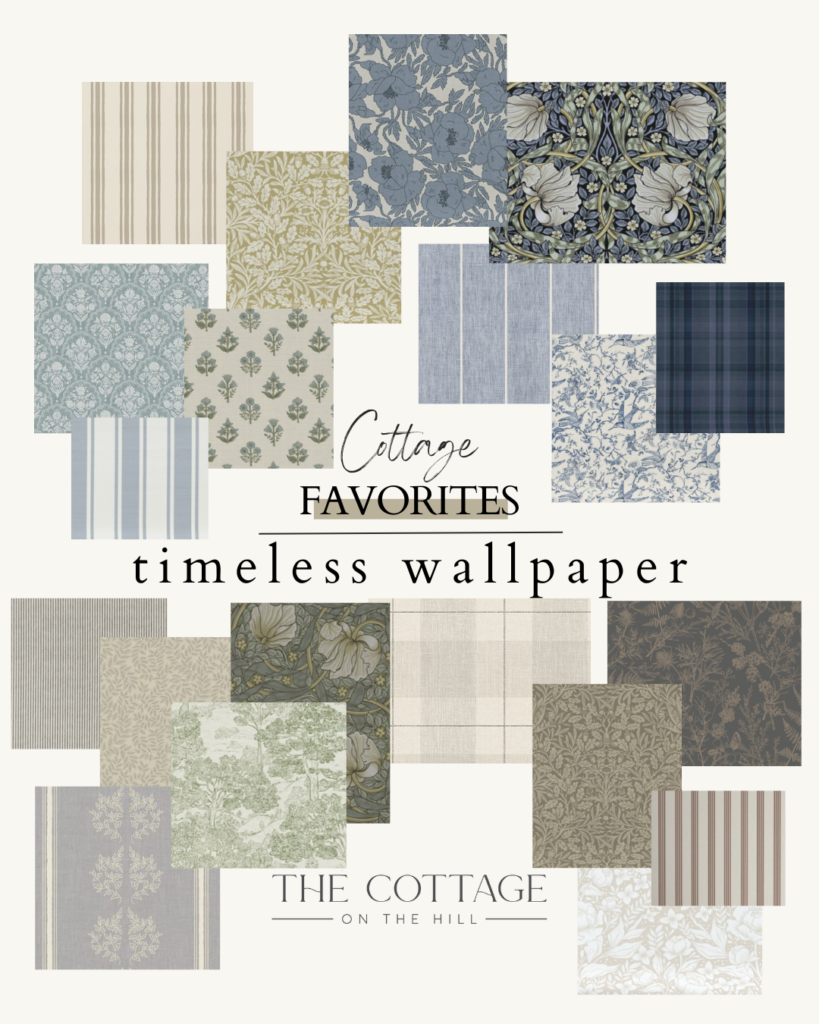
Wallpaper brings texture to your walls in a way that paint alone cannot. Whether it’s a subtle grasscloth, a delicate pattern, or a more pronounced design, wallpaper adds dimension and warmth.
In a cottage home, consider wallpapers with organic motifs, soft florals, or classic patterns like toile or damask in muted colorways. The texture of the paper itself—whether smooth, textured, or fabric-backed—adds another layer of tactile interest.
Even using wallpaper on just one wall or in built-in bookcases can bring enough pattern and texture to transform the feeling of a room.
Layer Textiles Through Pillows
Patterned pillows are where you can really play with texture layering. Mix different patterns—stripes with florals, checks with solids, vintage prints with modern geometrics—as long as they share a similar color palette.
But don’t stop at pattern. Vary the actual textures: linen, velvet, wool, cotton. A linen pillow with a subtle stripe next to a velvet solid next to a wool check creates dimension through both visual pattern and tactile variation.
The key is restraint. Choose 3-5 pillows per sofa, varying in size, pattern, and texture, but keeping the overall palette cohesive.
Incorporate Textured Lighting
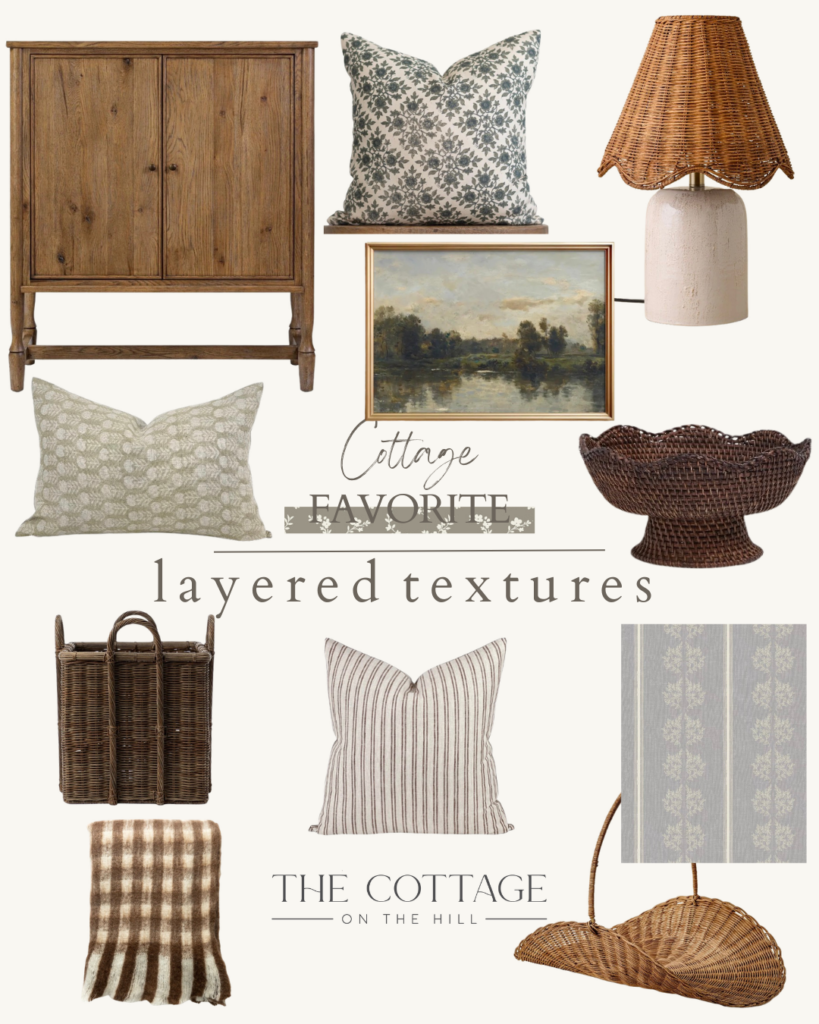
Lamps bring both function and texture. The textured lamps in the favorites collection show perfect examples: woven wicker shades, ceramic bases with organic shapes, linen drum shades with pleated details.
A woven rattan lamp shade adds warmth and casts beautiful shadows. A ceramic base with a reactive glaze adds visual texture through color variation. A pleated linen shade creates dimensional folds that catch light beautifully.
Mix lamp styles throughout the room—a wicker shade on one side, a linen shade on the other, perhaps a wooden lamp base paired with different shade styles. This variety creates visual interest while maintaining cohesion through repeated materials.
Balance with Stone and Wood Accents
Coffee tables and side tables offer opportunities to display textured accents. Stone bowls, wooden boxes, ceramic vases, brass candlesticks—these small pieces add layers of material contrast.
The stone accents collection shows beautiful examples: scalloped bowls in soft neutrals, pitchers with organic shapes, candlesticks with natural stone variations. These pieces aren’t just decorative; they’re textural moments that make a room feel collected and intentional.
Group items in odd numbers, vary heights, and mix materials. A wooden bowl next to a stone candlestick next to a brass frame—each piece brings its own texture while working together harmoniously.
Living spaces thrive on layered textures: patterned rugs underfoot, wallpaper on walls, varied pillows, textured lighting, and curated accents that tell your story.
Layering Textures in Bedrooms
Bedrooms should feel like a sanctuary, and texture is what creates that cocoon-like coziness we all crave.
Start with Bedding Layers
Your bed is the focal point, and it’s where you can create the most luxurious texture layering. Start with quality sheets—linen or cotton percale both feel wonderful and improve with washing.
Layer a textured coverlet or quilt—something with dimension like matelassé, waffle weave, or a vintage quilt with stitching that creates visual and tactile texture. Add a throw blanket in a contrasting texture: chunky knit, soft wool, or lightweight linen.
The key is varying the textures so each layer feels distinct. Smooth sheets, textured coverlet, soft throw—this progression creates depth and invites you to sink in.
Add Patterned Pillows and Wallpaper
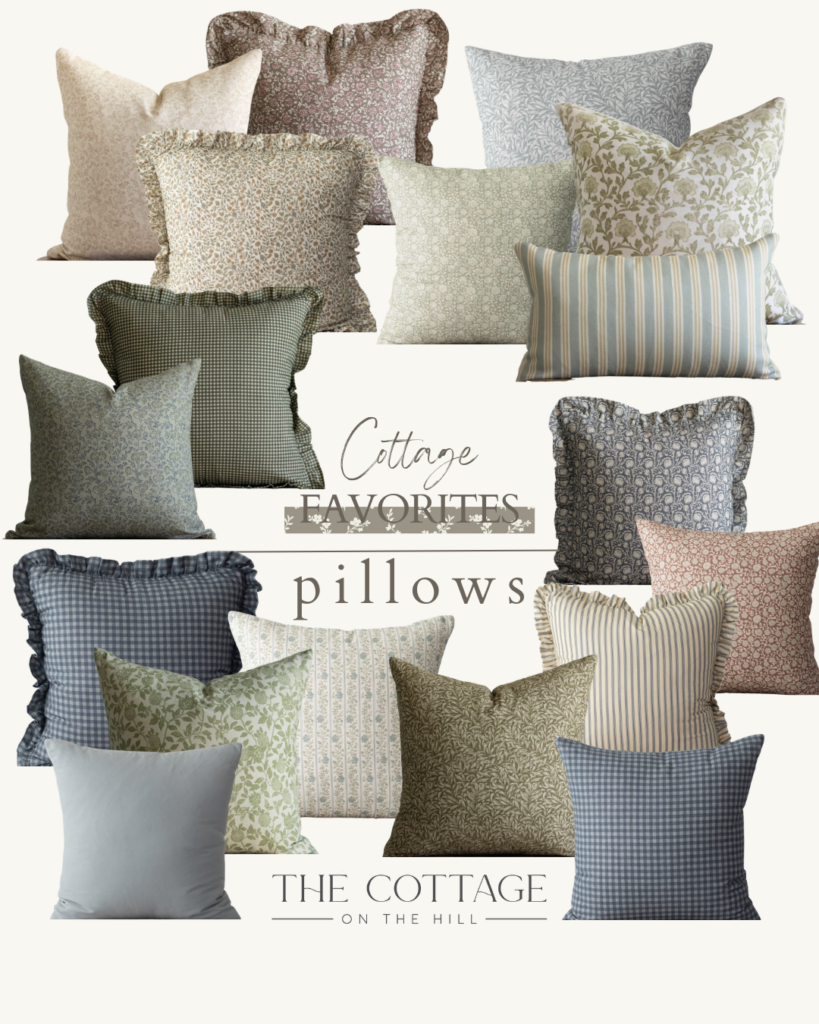
Just as in living spaces, bedrooms benefit from pattern layering. Euro shams in a soft pattern, standard pillows in solid linen, and a few decorative pillows that bring in subtle prints or textures.
Wallpaper in a bedroom creates an enveloping feeling. Consider a soft floral, a subtle stripe, or a textured grasscloth behind the bed. The pattern adds visual interest without being stimulating—you want restful, not busy.
Incorporate a Patterned Rug
A patterned rug beside the bed or layered under it brings warmth and softness underfoot. Choose something with a worn, vintage feel rather than something too crisp or new. The pattern should be soft and soothing—this isn’t the place for bold geometrics or high contrast.
The traditional patterns in the rug collection—with their muted tones and gentle designs—create exactly the right feeling for a bedroom. They add visual texture without being loud.
Layer in Wood and Stone
Nightstands offer space for textured accents. A wooden tray holding a stone dish, a ceramic lamp base, a brass picture frame. Even your furniture—wood nightstands with visible grain, a wooden bench at the foot of the bed—adds organic texture.
Don’t Forget Lighting
Bedside lamps with textured shades—linen, pleated fabric, or woven materials—cast soft, warm light and add another layer of visual interest. The ceramic and wood lamp bases in the collection show how the base itself becomes a textural element.
Bedrooms layer texture through varied bedding, patterned elements, rugs underfoot, and carefully chosen accents that create a restful sanctuary.
The Art of Restraint
Here’s what’s important to remember: layering textures doesn’t mean filling every surface or adding endless elements.
It means being intentional about the materials you choose, ensuring variety in both visual and tactile texture, and creating balance between rough and smooth, hard and soft, plain and patterned.
A room with too many textures feels chaotic. A room with too few feels flat. The sweet spot is having enough variety that your eye travels and discovers new details, but not so much that it feels overwhelming.
Guidelines for Balanced Texture Layering:
- Include at least 3-4 different material types in every room (wood, stone, metal, textile)
- Vary the finishes within each material (smooth brass and hammered brass, honed stone and rough stone)
- Mix pattern scales if using multiple patterns (large pattern rug, medium pattern pillow, small pattern wallpaper)
- Balance every hard surface with a soft element nearby
- Use repetition—if brass appears in hardware, echo it in lighting or accents
The art of texture layering is knowing when you have enough—variety creates interest, but restraint creates calm.
Building Your Texture Collection Over Time
You don’t need to layer in all these textures at once. In fact, the most beautiful, collected homes are the ones that build their textural richness over time.
Start with your foundations: rugs, major furniture, cabinetry. Then add layers gradually: a patterned pillow here, a stone bowl there, a woven lamp shade, a piece of wallpaper in a small space to test it out.
Pay attention to what your room is missing. Does it feel too hard? Add textiles. Too soft? Bring in stone or wood. Too plain? Introduce pattern through a rug or wallpaper. Too busy? Edit back to create breathing room.
The pieces in the favorites collection—rugs, lamps, stone accents, wood boards, textiles—are exactly the kinds of foundational textural elements that work in any cottage home. They’re timeless, they layer beautifully together, and they’ll serve you for years.
The most beautiful texture layering happens gradually—add thoughtfully, edit as needed, and let your home’s character develop over time.
The Feeling of a Well-Layered Home
When texture layering is done right, you feel it the moment you walk into a room.
There’s warmth and depth. There’s visual interest without clutter. There’s a sense that the space has been thoughtfully collected over time rather than decorated all at once. Your eye travels from the pattern in the rug to the grain in the wood to the glow of brass to the softness of linen, finding new details with each glance.
This is what creates that cozy cottage feeling—not any single element, but the thoughtful accumulation of beautiful textures that work together harmoniously. It’s rough and smooth, hard and soft, plain and patterned, all in balance.
That’s the home we’re all reaching for. And texture is how you get there.
A well-layered home isn’t just beautiful—it’s deeply, quietly, irresistibly cozy.
Ready to start layering textures in your own home? Head to my LTK to shop patterned rugs, textured lighting, stone accents, wood pieces, and all the beautiful elements that create a cozy, collected cottage home.