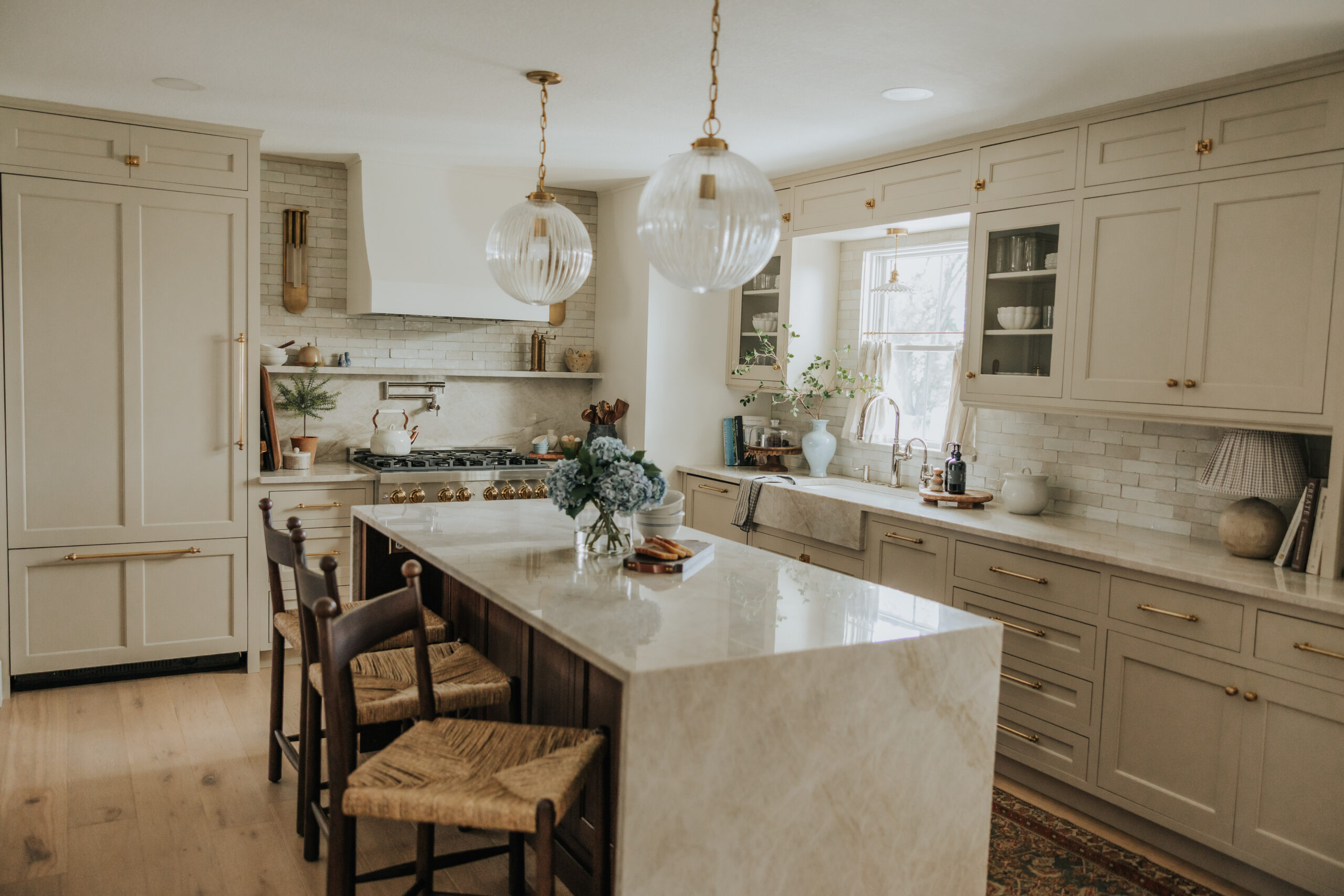
After years of designing homes—my own and others’—I’ve come to recognize certain principles that show up again and again in the spaces that feel most timeless, most lived-in, most right. These aren’t trendy rules or rigid formulas. They’re simply the quiet truths I’ve learned through trial, error, and paying attention to what actually works.
Some of these might challenge what you’ve been told about decorating. Others might feel like permission to trust your instincts. All of them are rooted in creating homes that feel calm, intentional, and deeply personal—spaces that won’t need to be redone when trends shift, because they were never following trends in the first place.
These are the design rules I live by.
1. Start with the Foundation, Not the Finishing Touches
Before you think about throw pillows or coffee table styling, get the bones right.
If the rug is too small, the layout doesn’t support how you live, the cabinetry feels cheap, or the lighting is an afterthought, no amount of beautiful styling will make the room feel finished. Timeless spaces are built from the ground up—starting with the elements that anchor everything else.
Choose the right rug size. Invest in quality cabinetry. Plan your lighting with intention. Get your layout functioning properly. When these foundational pieces are right, the finishing touches become easy. When they’re not, you’ll always be fighting an uphill battle.
Timeless design starts with what grounds the room, not what decorates it.
2. Bigger Scale Almost Always Reads Calmer
One of the most common mistakes I see is furniture, rugs, and lighting that are too small for the space.
Undersized pieces create visual tension. They make a room feel scattered, unanchored, and somehow “off” even if you can’t immediately pinpoint why. Generous proportions, on the other hand, allow a room to breathe and feel settled.
A larger rug that extends well beyond the furniture. A sofa that’s substantial enough to anchor the room. Lighting fixtures that have presence rather than shrinking into the background. When scale is right, everything feels more intentional and calm.
Generous proportions create visual ease—don’t be afraid to go bigger.
3. Cozy Comes from Contrast, Not Matching
This might be the most important rule on this list: matching creates flatness, contrast creates depth.
Warm wood tones against soft painted walls. A patterned rug next to quiet solid upholstery. Vintage pieces mixed with newer finds. Old brass hardware on freshly painted cabinetry. These contrasts—when intentional—are what make a room feel layered, collected, and deeply lived-in.
When everything matches perfectly, a room can feel sterile or staged. But when you embrace thoughtful contrast, you create the kind of coziness that invites you to stay, to sink in, to feel at home.
Cozy isn’t about coordination—it’s about beautiful, intentional contrasts.
4. Choose Fewer Materials, Then Repeat Them Well
Timeless homes don’t rely on variety—they rely on rhythm.
Instead of introducing ten different finishes, choose three or four and repeat them throughout your home. Maybe it’s unlacquered brass hardware in the kitchen, bathrooms, and on bedroom doors. Wood tones that echo from room to room. A consistent stone or tile that appears in multiple spaces.
This repetition creates cohesion and a sense of quiet confidence. Your home feels considered rather than collected randomly. The eye recognizes familiar elements and feels settled rather than overstimulated.
Repetition creates rhythm—choose your materials wisely and let them carry through.
5. Lighting Should Feel Like Atmosphere, Not Utility
Overhead-only lighting flattens a space and makes it feel like an office rather than a home.
Layered lighting is essential: table lamps on side tables and desks, sconces flanking mirrors or beds, picture lights illuminating art, pendants over islands or dining tables. Multiple light sources at varying heights create warmth, depth, and atmosphere.
Think about how you want a room to feel at different times of day. Morning light streaming through windows. Evening ambiance from lamps and candles. Lighting isn’t just functional—it’s one of the most powerful tools you have for creating mood.
Great lighting creates atmosphere—layer your sources and skip the overhead dependency.
6. Let Architecture and Millwork Do the Heavy Lifting
When the bones of a room are beautiful, you need far less decoration to make it feel complete.
Inset cabinetry with thoughtful proportions. Crown molding that adds elegance. Trim work that frames windows and doors with care. Built-in shelving that feels custom rather than added on. These architectural details create beauty without requiring anything extra.
Invest in getting the millwork right, and you’ll find that the room feels finished even before you bring in furniture. This is the foundation of timeless design—prioritizing quality craftsmanship over surface decoration.
Beautiful architecture means you need less decoration—let the bones do the work.
7. A Room Should Support Real Life, Not Fight It
Design that doesn’t accommodate how you actually live will never feel right, no matter how beautiful it looks in photos.
Think about your real rhythms. Where do bags and coats land when you walk in the door? Where do kids naturally gather? How do mornings and evenings actually unfold in your home? Design should support these patterns, not fight against them.
A mudroom with enough hooks. A kitchen island with seating where people actually want to sit. Durable fabrics in high-traffic areas. Storage where you need it, not just where it looks pretty. Beauty lasts longer when it works with your life, not against it.
Design should fit your life—not the other way around.
8. Timeless Doesn’t Mean Neutral—It Means Intentional
Color is absolutely welcome in timeless design. What matters is how you use it.
Pay attention to undertone. Consider how colors balance and relate to each other. Practice restraint—a room with one or two colors used well feels more grounded than one with six competing hues. When color is intentional and thoughtfully grounded, it endures.
Some of the most timeless rooms I’ve designed have deep green walls, rich blue cabinetry, or warm terracotta accents. The key is choosing colors that feel right for the architecture, the light, and the story you want to tell—not what’s trending this season.
Color can be timeless when it’s chosen with intention and restraint.
9. Patina and Imperfection Add Soul
Materials that soften and age over time are what give a home character and depth.
Honed marble that develops a gentle patina. Unlacquered brass hardware that darkens and tells a story. Aged woods with grain and texture. Linen that gets softer with every wash. These materials don’t fight time—they welcome it.
A home should feel collected and loved, not brand new forever. Imperfection adds soul. It makes a space feel authentic rather than staged, lived-in rather than untouchable. Don’t be afraid of materials that will change—that’s where the beauty lives.
The most beautiful homes are the ones that age gracefully, not perfectly.
10. If a Room Feels Calm, You’ve Done It Right
The ultimate measure of good design isn’t how impressive it looks—it’s how it makes you feel.
Does the room settle you? Does it feel like an exhale rather than a demand? Can you move through it easily? Do you want to linger? These are the questions that matter more than whether every detail is Instagram-worthy.
Timeless spaces don’t shout for attention. They quietly support the life you’re living. They hold your mornings, your evenings, your ordinary moments and your celebrations. When a room feels calm, deeply calm, you’ve done something right.
The best design feels like peace—trust how a space makes you feel.
The Common Thread
What ties all of these rules together is intention. Thoughtfulness. A willingness to choose quality over quantity, depth over decoration, and lasting beauty over fleeting trends.
Timeless design isn’t about following a checklist—it’s about understanding the principles that make spaces feel right and applying them in ways that honor your home, your life, and your story.
These are the rules I return to again and again. Not because they’re rigid, but because they work. They create homes that feel calm, cohesive, and deeply personal. Homes that won’t need to be redone when the next trend arrives, because they were built on something more enduring.
Looking for pieces that embody these timeless principles? Head to my LTK for furniture, finishes, and foundational elements that are built to last.