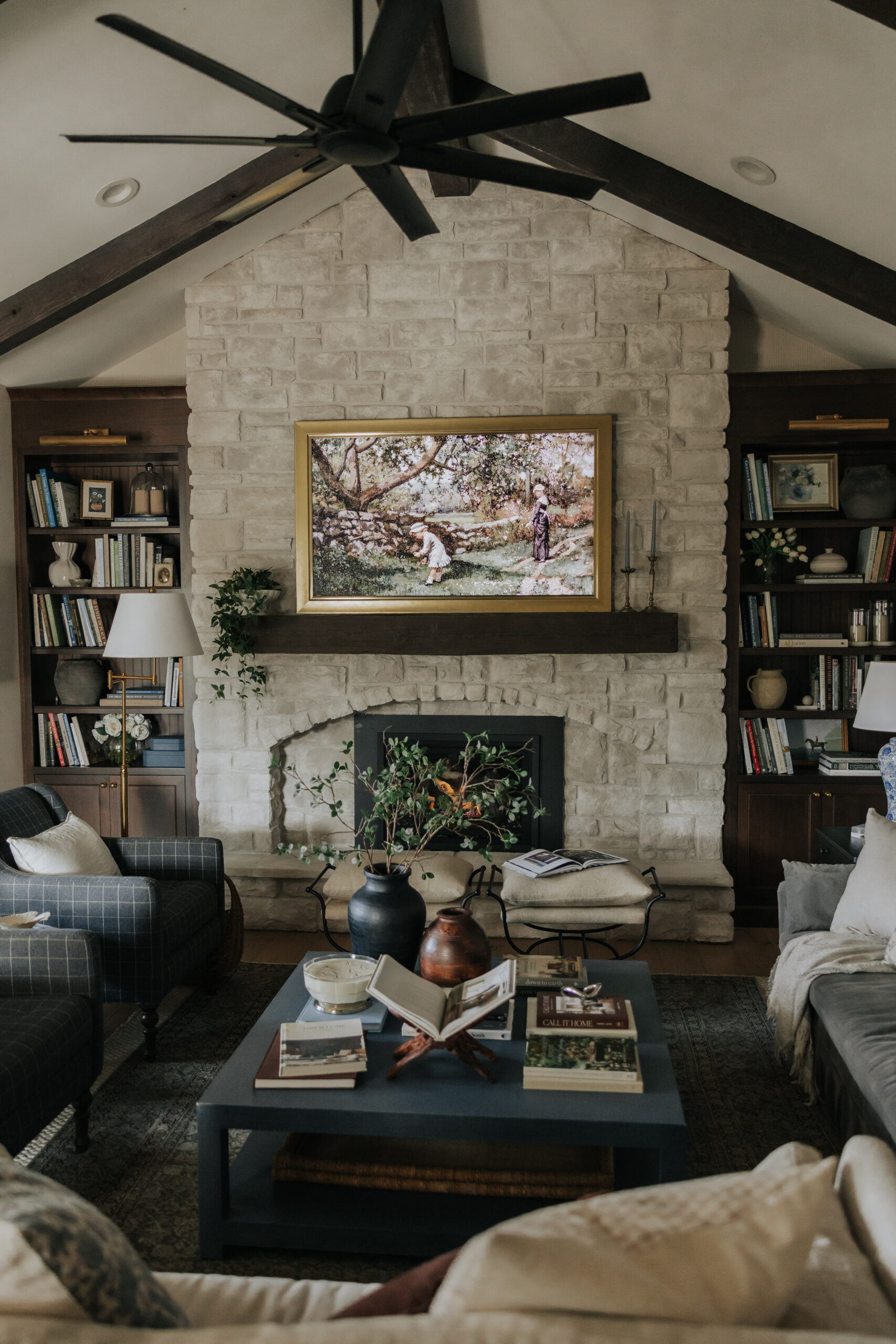
There’s something about a beautifully styled shelf that stops you in your tracks. It draws you in—not because it’s perfectly symmetrical or looks like it was staged for a photoshoot, but because it feels collected. Like every piece belongs. Like it was gathered over time, with intention, by someone who has a real eye for beauty.
That’s the feeling we’re after. Not styled in the performative sense, but curated in the truest sense—shelves that reflect who you are, what you love, and how you actually live. Shelves that feel layered and alive, not stiff or overdone.
Whether you’re working with a bookcase in the living room, built-ins flanking a fireplace, or floating shelves in a kitchen or bedroom, the principles are the same. It’s about understanding the building blocks of a collected look and then applying them in a way that feels natural to your space.
Let me walk you through exactly how to do it.
Start with a Clear-Out: The Blank Shelf Reset
Before you can style with intention, you need to start fresh.
Take everything off the shelf. Every book, every object, every piece of art. Set it all out where you can see it and assess what you’re actually working with.
Why this matters: When you style around what’s already there, you end up rearranging rather than truly curating. Starting from scratch forces you to make intentional decisions about what earns its place back on the shelf.
Edit before you style: As you look at everything laid out, ask yourself — does this belong? Does it fit the feeling I’m going for? Does it have meaning, beauty, or function? If the answer is no, set it aside. You don’t have to throw it away, but you do have to be honest about whether it belongs on this particular shelf.
Think in categories: Separate your items into loose groups — books, vessels and vases, art and frames, decorative objects, natural elements, and functional pieces. This makes the layering process much easier.
A blank shelf is the beginning of something beautiful — start fresh and let only the right pieces back on.
Establish Your Color Story First
Before a single object goes back on the shelf, decide on your color palette. This single decision will do more for a collected, cohesive look than almost anything else.
Why it matters: Shelves with no color intention look chaotic, even when the individual pieces are beautiful. A thoughtful color story ties everything together and creates that calm, curated feeling.
For a light, airy collected look: Lean into soft neutrals — cream, warm white, natural linen tones, soft sage, dusty blue, warm taupe. These colors read beautifully together and give shelves a breathable, gathered-over-time quality.
Use books as your color anchor: Books are often the biggest block of color on a shelf. Arrange them by color family — blues and greens together, creams and neutrals together — or turn them spine-in for a cleaner, more neutral backdrop that lets your objects shine. Coffee table books and art books with beautiful covers can also face outward as an intentional design moment.
Repeat colors throughout: If you introduce a dusty blue vase on the top shelf, echo that tone somewhere lower — a book spine, a smaller vessel, a framed print. Repetition creates rhythm and makes a shelf feel intentional rather than random.
Your color story is the invisible thread that ties a collected shelf together — establish it before you place a single object.
Build with the Rule of Three and Varying Heights
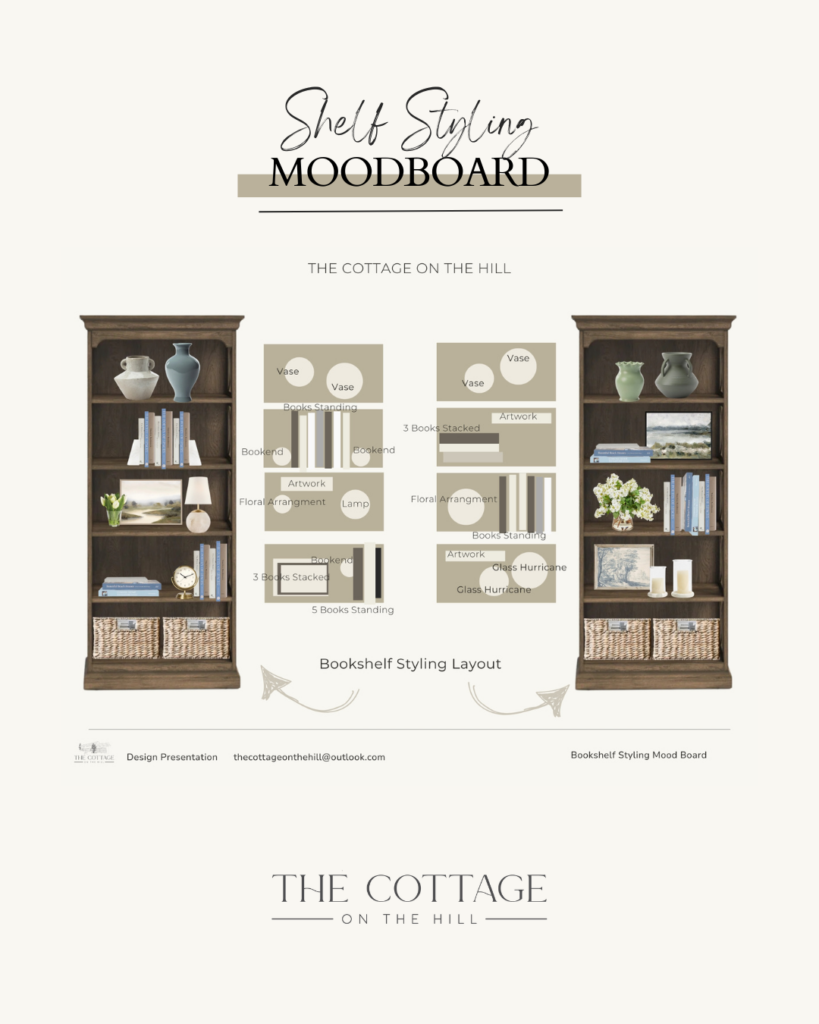
Once your color palette is set, it’s time to start placing objects — and the single most important principle here is varying height.
Why it matters: Shelves where every object is the same height feel flat and static. Varying heights create movement, rhythm, and visual interest — the hallmarks of a collected look.
Work in groupings of three: Three objects grouped together almost always look more natural and beautiful than two or four. A tall vase, a medium stack of books, and a small decorative object. A piece of framed art, a smaller vessel in front, and a single stem in a bud vase beside it. Odd numbers feel gathered rather than arranged.
Create a visual triangle: Within each shelf section, aim for a high point, a mid point, and a low point. This triangular arrangement guides the eye naturally and creates balance without symmetry.
Mix vertical and horizontal: Stand some books upright and stack others horizontally. This simple variation instantly adds dimension. Stacked books also create a platform — a natural riser for a vase, a small object, or a candle to sit on top of.
Varying heights and groupings of three create the organic, layered quality that makes shelves feel collected rather than arranged.
Layer in the Essential Elements
A truly collected shelf isn’t built from one type of object — it’s a layering of several different elements that work together. Here’s what every great shelf needs.
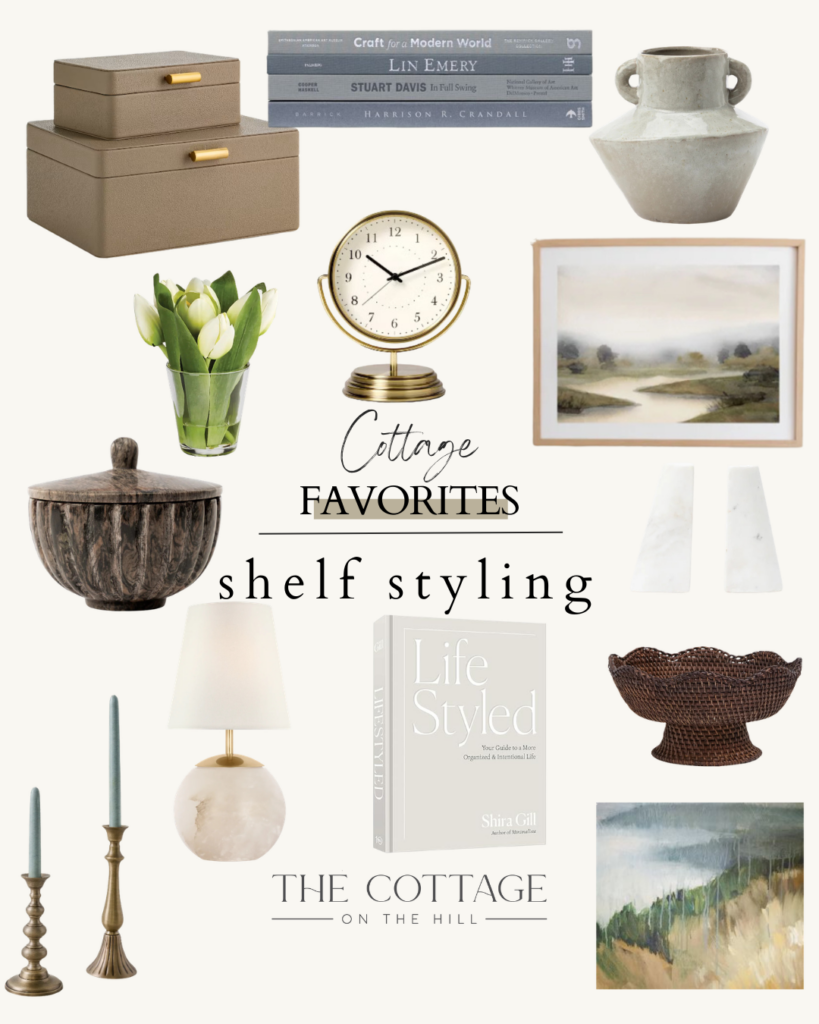
Books: The backbone of most shelves. Mix upright and stacked arrangements. Group by color for a cohesive look. Let a few beautiful spines face out intentionally. Don’t be afraid to leave some breathing room between groupings.
Vessels and vases: These are your sculptural anchors. Vary the shapes — a tall slender vase, a wide squat pot, a handled urn. Vary the materials — ceramic, stone, glass, aged terracotta. A cluster of vases in complementary tones and varying heights is one of the most effortless ways to create a collected moment.
Art and frames: Leaning a small piece of framed art against the back of a shelf adds depth and dimension. It doesn’t need to hang — the lean feels more casual and collected. Mix different frame styles and sizes. Let art overlap slightly with objects in front of it for that layered quality.
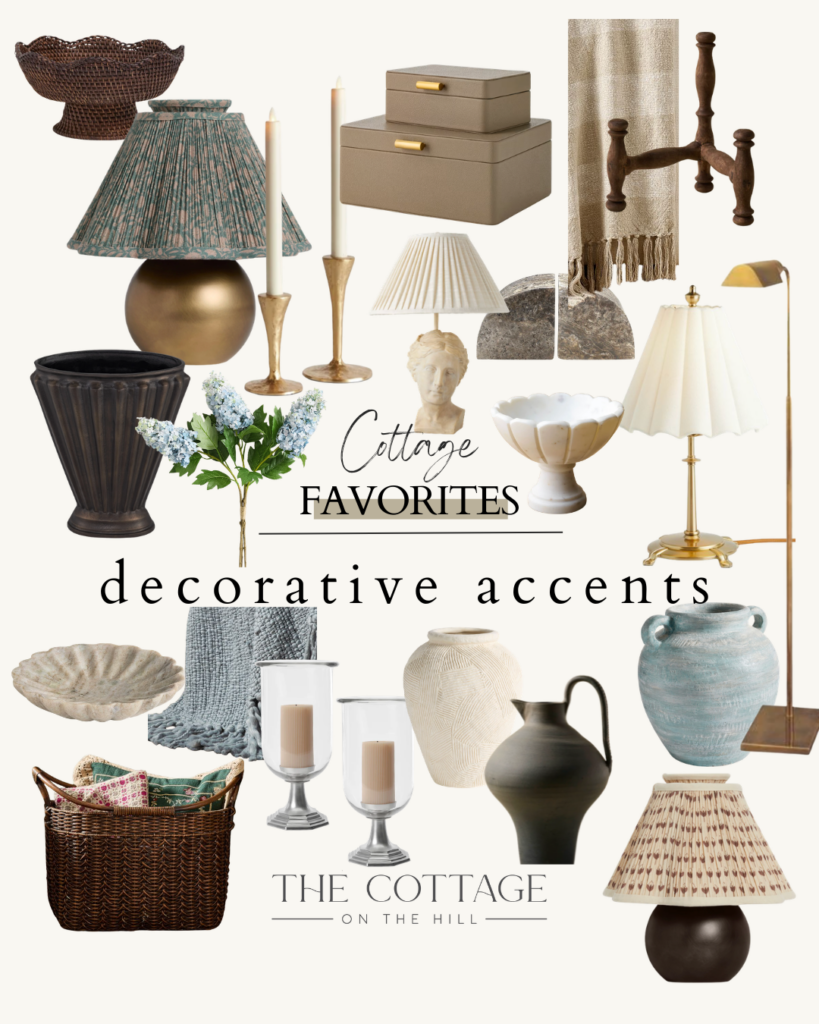
Decorative objects: Boxes, bowls, clock faces, small sculptures, bookends — these are the pieces that tell your story. Choose objects with meaning or with beautiful materiality. A wooden box with brass hardware, a stone bookend, a ceramic lidded bowl — these pieces add soul to a shelf.
Natural elements: Fresh or faux greenery, dried botanicals, a small potted plant, a single stem in a bud vase — living elements bring warmth and organic beauty that no purely decorative object can replicate. Even on the most minimal shelf, a natural element makes everything feel more alive.
Candles and candlesticks: Taper candles in brass candlesticks, pillar candles on a tray, small votives tucked in — candles add warmth, height variation, and an inviting quality. They signal that this space is meant to be lived in.
A collected shelf layers books, vessels, art, objects, natural elements, and candles — each category contributing something essential.
Treat Every Shelf as Its Own Vignette
One of the most common shelf styling mistakes is thinking about the whole bookcase at once rather than treating each individual shelf as its own small scene.
Why it matters: When you style shelf by shelf — each one its own complete, balanced vignette — the whole unit comes together with a layered, collected quality that feels intentional throughout.
Give each shelf a different composition: The top shelf might feature a pair of statement vases with books between them. The middle shelf might have leaning art, a small lamp, and a floral arrangement. The bottom shelf might anchor with baskets, stacked books, and a larger vessel. Each shelf tells its own small story while contributing to the larger whole.
Use lamps intentionally: A small table lamp on a shelf is one of the most impactful styling choices you can make. It adds height, warmth when lit, and a sense that the shelf is part of a living, breathing space rather than just a display.
Don’t match shelves to each other: Asymmetry across shelves is what creates that collected feeling. If the top shelf is symmetrical, make the middle one asymmetrical. Vary the density — some shelves fuller, some with more breathing room. This variation is what makes a bookcase feel gathered over time rather than purchased as a set.
Each shelf is its own vignette — style them individually, vary the compositions, and let the whole tell a layered story.
Adapt the Approach for Every Shelf Type
The collected approach works across every type of shelving, but each context has its own nuances.
Bookcases and built-ins: These offer the most real estate and the most opportunity for layering. Treat them as an art installation — step back often to assess the whole. Built-ins especially benefit from incorporating a mix of closed storage at the bottom (baskets, boxes) and open styling above. Ground the bottom shelves with heavier, more substantial pieces and let things get lighter and airier as you move up.
Floating shelves: Because they’re often arranged in clusters or rows, floating shelves need extra attention to vertical rhythm. Stagger the heights of objects across shelves so the eye moves naturally. These shelves also tend to be shallower, so focus on fewer, more intentional pieces per shelf rather than trying to layer deeply.
Kitchen open shelving: Function has to live here alongside beauty, but that doesn’t mean it can’t look collected. Stack beautiful dishes in neutral tones, display cookbooks with beautiful spines, tuck a small vase of stems beside everyday objects. The key is keeping the palette tight and mixing practical items with a few purely decorative ones.
Bedroom shelves: These tend to be more personal and intimate. Lean into meaningful objects — photos in beautiful frames, a stack of books you’re actually reading, a small plant, candles for evening ambiance. Bedroom shelves should feel quieter and more personal than living room shelves.
The collected approach adapts to any shelf type — adjust the scale and density to fit the context while keeping the layering principles consistent.
Leave Room to Breathe
This is perhaps the most important principle of all, and the one most people resist.
Why it matters: Overcrowded shelves feel cluttered, even when every individual piece is beautiful. The empty space between and around objects is what allows each piece to be truly seen and appreciated. Breathing room is what separates a collected look from a cluttered one.
Edit ruthlessly: Once you’ve styled each shelf, step back and look with fresh eyes. If something feels busy or your eye doesn’t know where to land, remove one piece. Then look again. Often, less is genuinely more.
Let some shelves stay simple: Not every shelf needs to be fully styled. A shelf with just a few books and a single beautiful vessel can be as striking as a fully layered one — sometimes more so. Varying the density across the unit adds to that collected, over-time feeling.
Negative space is a design choice: An empty corner of a shelf, the space around a single vase, the gap between two book groupings — these aren’t accidents or missed opportunities. They’re intentional moments of visual rest that make the whole look more beautiful.
Breathing room isn’t emptiness — it’s the space that allows beautiful things to truly be seen.
The Finishing Touch: Style for Real Life
The most beautiful shelves aren’t the ones that look perfect — they’re the ones that look lived in.
A book slightly pulled out from the shelf. A vase holding actual stems from your garden. A small framed photo from a trip you loved. A candle that’s actually been burned. These imperfections and personal touches are what elevate a shelf from styled to truly collected.
Rotate seasonally: Swap in lighter vessels and softer colors for spring and summer. Bring in warmer tones and more textured pieces in fall and winter. Your shelves should evolve with the seasons the way your home does — not stay static as a finished product.
Let them grow over time: The most beautiful shelves are built slowly. A piece added from a flea market trip. A vase from a favorite shop. A book from someone you love. Give yourself permission to add and edit over time rather than trying to achieve a finished look all at once.
Style for you: At the end of the day, your shelves should reflect you — what you love, what you’ve gathered, what brings you joy when you look at it. The principles here are a guide, not a formula. Trust your eye. Start with what you love and build from there.
The most collected shelves are built slowly, lived in fully, and filled with pieces that tell your story.
Shelves done well are one of the most personal expressions of your design sensibility. They’re where your books live, where your collected objects find a home, where the pieces that matter to you get to be seen every day.
Start with what you love. Edit with intention. Layer in height and texture and warmth. Leave room to breathe. And then let your shelves become exactly what they’re meant to be — a beautiful, collected reflection of you and your home.
Ready to style your shelves with a collected feel? Head to my LTK for all the vessels, art, books, candlesticks, baskets, and decorative objects that make shelves feel beautifully gathered and uniquely yours.