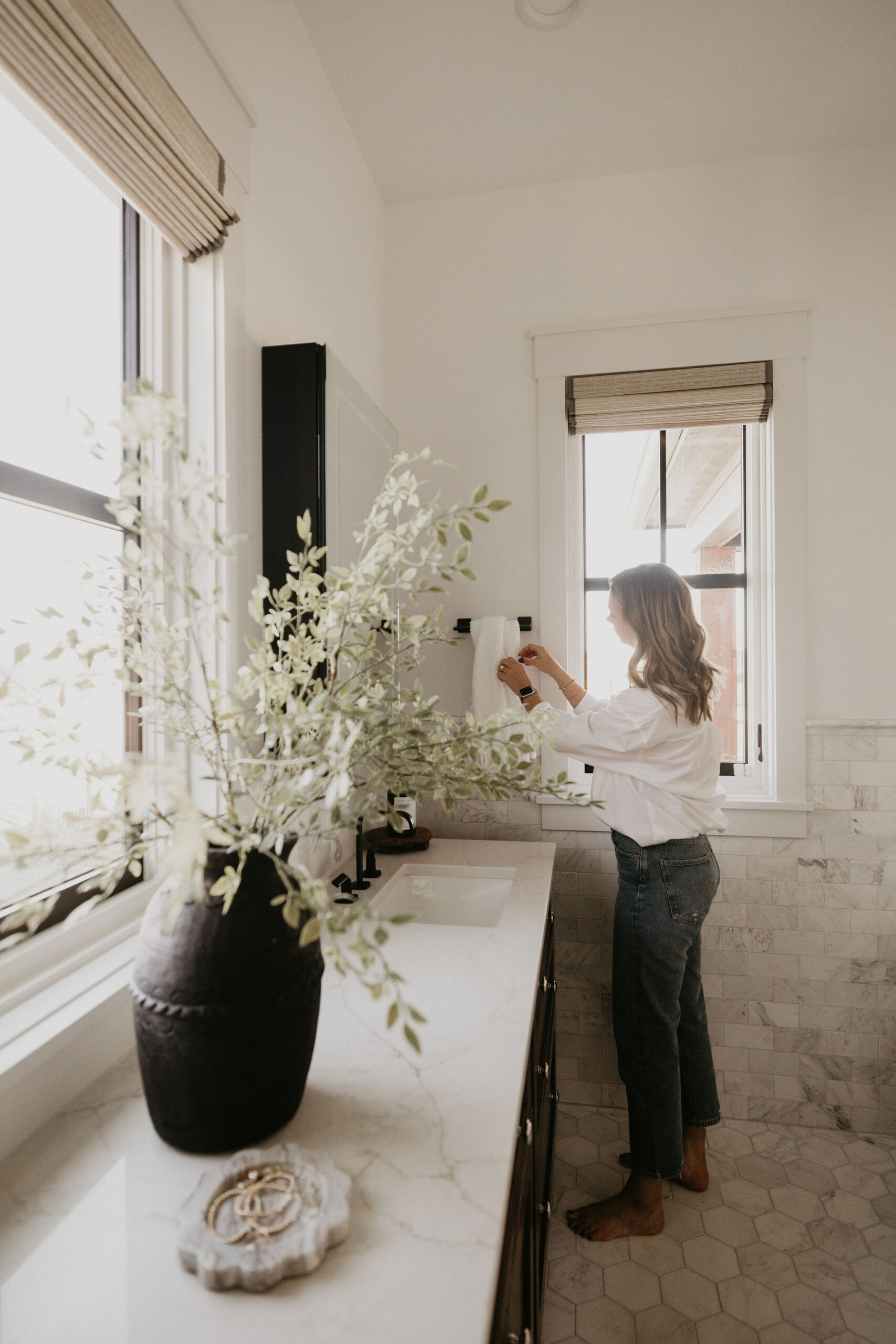
There’s a particular challenge that comes with spring design—we crave lighter, airier spaces as the days grow longer, but we don’t want our homes to feel cold or stark. The goal isn’t to strip away all the coziness we’ve built over the winter months. It’s to create rooms that breathe, that feel fresh and open, while still maintaining the warmth and soul that makes a house feel like home.
This balance—light without coldness, airy without emptiness—is one of the most important principles in creating spaces that feel both collected and calm. It’s not about choosing one or the other. It’s about understanding how to layer them together so your rooms feel inviting in every season.
Let me walk you through exactly how to create this feeling in your own home.
Understanding the Balance
Light and airy doesn’t mean minimal or sparse. It doesn’t mean all white everything or eliminating texture and warmth.
What it does mean is creating visual breathing room—spaces where the eye can rest, where natural light can move freely, where the architecture and beautiful pieces you’ve chosen have space to be appreciated. But within that openness, you’re layering in the warm tones, natural materials, and textures that keep the space from feeling cold or impersonal.
The key is knowing which elements create lightness and which elements bring warmth, then intentionally combining them in ways that feel balanced rather than competing.
Light, airy rooms aren’t about removing warmth—they’re about creating space for both light and warmth to coexist beautifully.
Start with Paint: The Foundation of Light
Paint is the most powerful tool you have for creating a light, airy feeling, and it’s where most people start.
Choose the right whites and neutrals: Not all whites create the same feeling. Stark, cool whites with blue undertones can feel sterile and cold. Instead, choose warm whites with subtle cream or yellow undertones—colors like Alabaster or White Dove that bring lightness without coldness.
Soft, warm neutrals—creamy taupes, warm grays with beige undertones, or pale greiges—also create airiness while maintaining warmth. These colors reflect light beautifully but don’t feel stark or cold.
Paint the ceiling: Don’t overlook your fifth wall. Painting the ceiling in a soft white or the same color as your walls creates continuity and makes the room feel taller and more open. A white ceiling reflects the most light and adds to that airy feeling.
Consider your trim: Crisp white trim against warm wall colors creates definition and brightness. This contrast actually makes rooms feel more open because it highlights the architecture and creates visual clarity.
Warm whites and soft neutrals create lightness that still feels inviting—choose undertones carefully.
Maximize Natural Light
Light, airy rooms are flooded with natural light, or at least give the impression of it.
Remove window treatments or lighten them: Heavy drapes block light and make rooms feel smaller and darker. If privacy isn’t an issue, consider leaving windows bare. If you need coverage, choose sheer linen curtains or light-filtering shades that soften light without blocking it.
When you do use curtains, hang them high and wide—close to the ceiling and extending past the window frame. This draws the eye up and makes windows appear larger, bringing in more visual light.
Keep windows clean and unobstructed: It sounds simple, but clean windows make a remarkable difference. Don’t block windows with furniture or large plants. Let the light flow into the room unimpeded.
Use mirrors strategically: Mirrors reflect light and make spaces feel larger and brighter. Place a mirror opposite or adjacent to a window to bounce natural light deeper into the room. Choose mirrors with warm frames—brass, gold, or wood—to add warmth while creating brightness.
Natural light is the foundation of airy spaces—let it flow freely and reflect it strategically.
Choose Furniture with Visual Lightness
Furniture can feel heavy and grounding or light and airy depending on its design, and this dramatically affects how a room feels.
Look for legs and open bases: Furniture that sits directly on the floor feels heavier than furniture with visible legs. Choose sofas, chairs, and tables with legs that allow you to see under and through them. This creates visual space and makes rooms feel less cluttered.
Select lighter wood tones: Dark, heavy woods can anchor a space beautifully, but they also add visual weight. For a lighter feel, incorporate lighter wood tones—natural oak, whitewashed finishes, or blonde woods. These still bring the warmth of wood but feel fresher and airier.
Consider scale carefully: Oversized, bulky furniture fills space and can make a room feel crowded. Choose appropriately scaled pieces that fit the room without overwhelming it. This doesn’t mean going small—it means choosing pieces that are substantial but not heavy.
Mix in glass and lucite: Glass coffee tables, lucite chairs, or acrylic lamps take up physical space without adding visual weight. They’re perfect for layering in function while maintaining that airy feeling.
Furniture with legs, lighter woods, and appropriate scale creates openness while still feeling grounded.
Layer in Warmth Through Textiles
This is where the warmth comes in—textiles are essential for keeping light, airy rooms from feeling cold or sterile.
Choose natural fibers: Linen, cotton, wool, jute—these natural materials bring warmth and texture without adding visual heaviness. A linen sofa in a soft neutral, linen curtains that filter light, a jute rug underfoot—all of these add warmth while maintaining that airy quality.
Keep the palette soft and warm: Even in light, airy spaces, your textiles should lean warm. Cream, oatmeal, warm taupe, soft grays with beige undertones—these colors add coziness without darkening the space.
Layer thoughtfully: You don’t need as many layers in spring and summer as you do in winter, but you still need some. A few well-chosen pillows, a lightweight throw draped over a chair, linen curtains—these soft elements make the space feel lived-in and warm.
Add texture: Texture creates visual interest and warmth. Waffle weave, linen, chunky knits in lighter weights, woven materials—these add dimension and warmth without adding darkness.
Natural fiber textiles in warm, soft tones bring essential warmth to light spaces.
Bring in Warm Wood Tones
Wood is one of the most important elements for adding warmth to light, airy rooms.
Even in the brightest, most minimal spaces, wood grounds the room and adds organic warmth. The key is choosing the right tones and using them intentionally.
Light to medium woods work best: Honey oak, natural walnut, light-toned woods bring warmth without heaviness. They add richness and soul while maintaining that fresh, airy feeling.
Use wood strategically: A wood dining table, a wooden bench, wood picture frames, cutting boards displayed in the kitchen—these moments of wood add warmth throughout the space without overwhelming it.
Don’t be afraid to mix wood tones: Varying wood tones actually adds to the collected, layered feeling. A lighter oak floor with medium walnut furniture and a darker wood frame creates depth and interest.
Wood brings essential organic warmth—choose lighter to medium tones for maximum impact without heaviness.
Edit Intentionally: Less Really Is More
Light, airy spaces require editing. This doesn’t mean stark minimalism—it means being thoughtful about what stays.
Clear surfaces: Leave breathing room on counters, side tables, and shelves. Not every surface needs to be styled. Empty space creates visual calm and allows light to move through the room.
Edit your accessories: Instead of displaying everything, curate. Choose a few meaningful pieces and give them space to be appreciated. A single beautiful vase, a small collection of frames, a few books—these feel intentional rather than cluttered.
Create negative space: Negative space—the empty areas around and between objects—is just as important as the objects themselves. It gives the eye places to rest and makes the room feel open and calm.
Rotate seasonally: You don’t have to store everything, but rotating what’s on display keeps things feeling fresh and prevents visual clutter. Store heavier, darker pieces in spring and bring out lighter, brighter elements.
Editing creates the breathing room that makes spaces feel light and airy—choose what stays with intention.
Add Warmth Through Metals and Finishes
The metals and finishes you choose significantly impact whether a space feels warm or cold.
Choose warm metals: Brass, bronze, gold, and unlacquered brass all bring warmth. These finishes catch light beautifully and add richness without adding visual weight. Use them in lighting, hardware, picture frames, and accessories.
Mix in some cooler metals sparingly: A touch of polished nickel or chrome can add freshness, but balance it with warm metals to avoid coldness. The ratio should favor warmth—perhaps 70% warm metals, 30% cool.
Consider finishes: Matte and honed finishes feel softer and warmer than high-gloss or polished finishes. Matte brass, honed marble, matte-painted furniture—these feel more organic and less stark.
Warm metals like brass and bronze add essential richness to light spaces—use them generously.
Incorporate Living Elements
Nothing brings life and warmth to a light, airy space like actual living things.
Fresh greenery and flowers: Plants and flowers bring color, life, and organic warmth. They soften hard edges and add movement and energy. Even in the most minimal spaces, a vase of fresh branches or a potted plant adds soul.
Choose the right vessels: Display greenery in warm materials—ceramic vases, wood bowls, brass containers. The vessel matters as much as what’s in it.
Vary heights and types: Mix tall branches with low plants, flowers with greenery. This creates visual interest and adds to that collected, layered feeling.
Living elements bring irreplaceable warmth and life—include them even in the lightest spaces.
Balance Pattern and Solid
Pattern adds visual interest and warmth, but in light, airy spaces, it needs to be used with restraint.
Let one pattern lead: A patterned rug, a piece of art, or patterned pillows—choose one element to carry pattern and keep everything else solid or subtly textured.
Choose soft, warm patterns: Delicate florals, soft stripes, gentle geometrics in warm tones add interest without heaviness. Avoid bold, high-contrast patterns that can feel busy.
Use plenty of solids: Solid colors in warm neutrals create visual rest and allow the room to feel open. Balance any pattern with generous amounts of solid, textured materials.
Pattern adds warmth and interest—use it sparingly in soft, warm tones for light, airy spaces.
The Importance of Lighting Layers
Lighting can make or break the feeling of a space, especially when you’re trying to maintain warmth in a light, airy room.
Maximize natural light during the day: We’ve covered this, but it’s worth repeating—natural light is your primary source of that airy feeling.
Layer warm artificial light at night: As the sun sets, your artificial lighting needs to create warmth. Use table lamps, floor lamps, and sconces with warm-toned bulbs (2700K-3000K). Multiple sources create depth and warmth.
Choose warm-toned lamp shades: Linen, fabric, and warm-toned shades cast warm light. Avoid stark white shades that can feel cold.
Avoid overhead-only lighting: Overhead lights flatten a space. Layered lighting from multiple sources creates dimension, warmth, and that inviting glow.
Layered, warm lighting is essential—it’s what makes light, airy spaces feel cozy when the sun goes down.
The Seasonal Shift
Creating light, airy rooms in spring doesn’t mean abandoning the coziness you’ve built—it means adjusting and lightening.
Store heavier layers: Put away chunky throws, darker pillows, and heavy textiles. Bring out lighter-weight versions in similar warm tones.
Swap in lighter colors: Trade deeper tones for lighter versions—from charcoal to light gray, from burgundy to soft blush, from forest green to sage.
Lighten window treatments: Remove heavy curtains or swap them for sheers. Let more light in while still maintaining privacy where needed.
Edit accessories: Put away some of the heavier, darker accessories and bring out lighter, brighter pieces. This isn’t about removing warmth—it’s about lightening the visual weight.
The seasonal shift is about lightening, not eliminating warmth—adjust rather than start over.
The Feeling You’re After
When you successfully balance light and warmth, you create spaces that feel open and fresh without losing soul.
Walking into the room, you should feel the space breathe. Light should move freely, surfaces should feel calm rather than cluttered, and the overall impression should be one of ease and openness.
But you should also feel warmth—from the wood tones, the warm whites, the natural textiles, the brass lighting. The space should feel collected and loved, not staged or sterile. It should invite you in rather than hold you at arm’s length.
This is the sweet spot—rooms that are light enough to feel fresh and airy, but warm enough to feel like home.
The goal is rooms that breathe while still embracing you—light and airy, yes, but never cold.
Ready to create light, airy rooms that still feel warm and collected? Head to my LTK for the furniture, textiles, lighting, and accessories that bring this beautiful balance to life.