


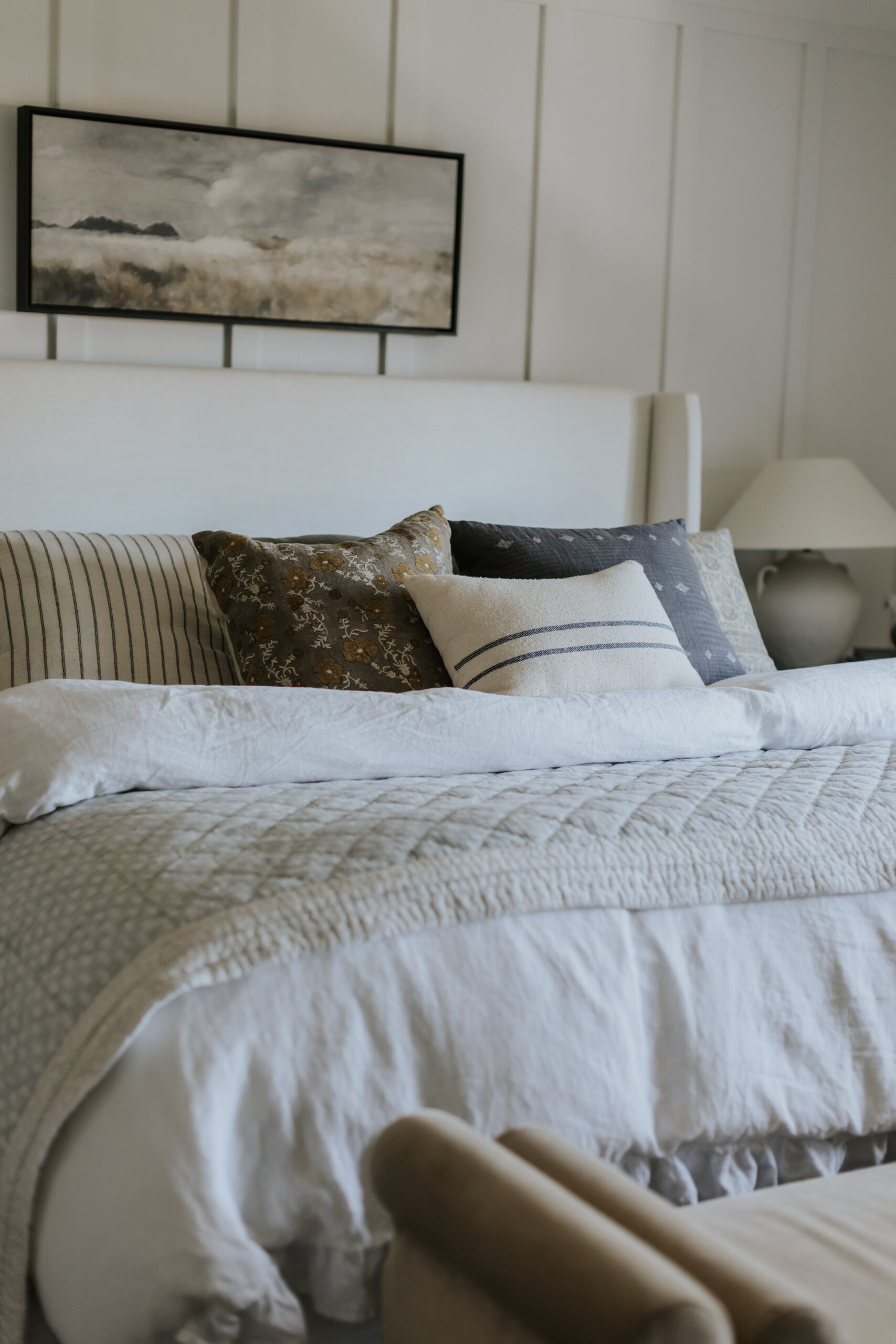
There’s a particular kind of coziness that comes from a beautifully layered bed—the kind that makes you want to climb in immediately, that looks effortlessly collected rather than perfectly styled. It’s the difference between a bed that looks like it came straight from a catalog and one that feels like it’s been loved and lived in.
The truth is, most of us start with the basics: fitted sheet, flat sheet, comforter, two pillows. It’s functional, it works, and there’s nothing wrong with it. But if you’ve ever wondered why your bed doesn’t look quite as inviting as the ones you see in magazines or beautifully designed bedrooms, it often comes down to layering.
Layering bedding isn’t about making your bed harder to get into or adding things you don’t need. It’s about creating depth, texture, and visual interest through thoughtful choices that also make your bed more comfortable and adaptable to different seasons. It’s surprisingly simple, and the transformation is immediate.
Let me walk you through how to build a bed that feels cozy, collected, and completely yours.
Moving Beyond “Bed in a Bag”
Most bedding sets give you the absolute basics: a comforter or duvet cover, a flat sheet, a fitted sheet, and matching pillowcases. These sets are designed to be easy and coordinated, but they often fall flat because everything matches too perfectly and there’s no dimension.
The key to elevating your bed is thinking in layers rather than sets. You’re not replacing everything—you’re adding elements that create depth and make the bed feel more intentional.
Here’s what that looks like: you keep your foundation (fitted sheet, flat sheet, pillowcases), but you swap out or layer over the comforter with something more textured. You add different pillow types that vary in size and texture. You introduce a throw blanket that brings in another material. Suddenly, your bed has dimension, warmth, and that lived-in quality that feels so inviting.
The most beautiful beds aren’t perfectly matched sets—they’re thoughtfully layered elements that create depth and texture.
The Foundation Layer: Sheets
Your sheets are the foundation of everything, and they matter more than you might think.
Quality sheets—whether linen, cotton percale, or cotton sateen—feel better, wear better, and actually improve with washing. Linen becomes softer over time, developing that lived-in texture that’s impossible to replicate when new. Cotton percale stays crisp and cool, perfect for layering. Cotton sateen has a subtle sheen and smooth hand that feels luxurious.
The color and pattern of your sheets also set the tone for everything else. White or cream sheets create a clean, timeless foundation that works with any layering you add on top. Soft neutrals like taupe, gray, or blush bring warmth without limiting your options. Patterned sheets—like gingham, ticking stripes, or subtle florals—can be the foundational pattern that guides your other choices.
Don’t underestimate the power of a beautiful flat sheet. Even if you don’t use it for warmth, folding it over the top of your duvet or coverlet creates a classic, finished look and adds another textural layer.
Quality sheets are the foundation—choose materials that improve with time and colors that support your layering.
The Middle Layer: Coverlets, Quilts, and Duvets
This is where most people stop at a basic comforter, but there’s so much more possibility here.
Coverlets are lightweight, textured bedcovers that sit on top of your sheets. They’re perfect for layering because they add visual and tactile texture without being too heavy. Look for coverlets in materials like matelassé (a woven fabric with a quilted appearance), linen, or cotton with interesting weaves. The texture is what makes them special—they catch light, create dimension, and feel substantial without being bulky.
Quilts bring pattern, history, and softness. A vintage quilt or a new quilt with a timeless pattern adds both warmth and visual interest. Quilts work beautifully in bedrooms because they feel collected and personal. The stitching creates texture, and if you choose one with a subtle pattern, it can be that leading pattern that ties the whole bed together.
Duvets with textured covers offer another option. Instead of a solid, flat duvet cover, look for ones with texture—linen with natural slubs, cotton with pintucks or pleating, or covers with subtle patterns. A duvet can be used alone in warmer months or layered under other elements in winter.
The key is choosing something with dimension. Flat, smooth comforters don’t create the same visual interest as textured coverlets or quilts. That texture is what makes your bed look inviting rather than just functional.
The middle layer brings texture—choose coverlets, quilts, or textured duvets that add dimension, not just coverage.
The Finishing Layer: Throws and Blankets
A throw blanket draped across the foot of the bed or folded over one side is the detail that makes a bed feel complete and lived-in.
This is where you can introduce a contrasting texture or color. If your bed is mostly whites and creams, a chunky knit throw in oatmeal or gray adds warmth. If you have patterned sheets or a quilt, a solid linen or wool throw provides visual rest. If everything else is smooth, a cable knit or waffle weave throw brings tactile richness.
The throw isn’t just decorative—it’s functional. It’s the layer you pull up when you’re reading in bed, the extra warmth on a cold night, the piece that makes the bed feel cozy and accessible rather than too precious to touch.
Draping it casually—not perfectly folded, not rigidly placed—is what creates that effortless, lived-in look. Let it fall naturally, bunched slightly, as if someone just used it and left it there.
A throw blanket adds the final layer of texture and warmth—drape it casually for that effortless, lived-in feel.
The Pillow Layers: Beyond Basic Sleep Pillows
This is where bedding layering really transforms. Instead of two matching pillows, you’re building a pillow arrangement that has depth, texture, and visual interest.
Start with your sleeping pillows against the headboard—two or three standard pillows in simple pillowcases that match or complement your sheets. These are functional; they don’t need to be fancy.
Layer standard shams on top of your sleeping pillows. These can introduce pattern or texture—a stripe, check, or floral if the rest of your bedding is mostly solid, or a textured solid if you have pattern elsewhere.
Add Euro shams (large square pillows, usually 26×26) in front of your standard shams. These create height and presence. Choose euro shams in a textured fabric or a subtle pattern. Linen euros in a soft neutral, gingham euros that tie into patterned sheets, or solid euros in a complementary color all work beautifully.
Finish with decorative pillows—one to three smaller pillows that bring in additional texture, pattern, or color. A lumbar pillow in linen, a small square pillow in velvet, a bolster in a complementary pattern. These are the finishing touches that make the bed feel curated.
The key is varying sizes, textures, and patterns while maintaining a cohesive color palette. You want the eye to travel across the pillows discovering new details, not be overwhelmed by too many competing elements.
Pillow layering creates depth—start with sleeping pillows against the headboard, layer shams on top, add euros for height, and finish with decorative accents.
Seasonal Layering: Adapting Your Bed Throughout the Year
One of the best things about layering is how easily you can adapt your bed to different seasons without starting from scratch.
Spring and Summer: Keep things light and breathable. Linen or percale sheets, a lightweight linen or cotton coverlet, and minimal throw blankets. You might skip the heavy quilt entirely and just use a textured duvet or coverlet. Lighter colors—whites, creams, soft blues—help the bed feel airy and fresh.
Trade heavier throws for lightweight linen or cotton blankets that add texture without warmth. Keep pillow layers but choose lighter fabrics—linen, cotton, lighter weaves.
Fall and Winter: This is when you add warmth and coziness. Keep your base sheets but layer on a quilt or heavier coverlet. Add a chunky knit throw or wool blanket for extra warmth. You might even layer a coverlet under a quilt for maximum coziness.
Richer colors and warmer tones—creams, taupes, soft grays, muted plaids—make the bed feel cozy. Add velvet or wool pillow covers for extra texture and warmth. The bed should feel like a cocoon you want to burrow into.
The beauty of this approach is that you’re not changing everything—you’re simply adjusting a few layers to suit the season.
Seasonal layering adapts your bed to the weather—lighter materials and colors for warm months, richer textures and warmth for cold months.
Choosing Textures That Work Together
Just like layering textures throughout your home, bedding layering requires a mix of different tactile elements.
Smooth textures like percale sheets or sateen pillowcases create a crisp, clean base. Textured weaves like linen, matelassé, or waffle-weave coverlets add dimension. Soft, plush textures like velvet pillows or chenille throws invite touch. Chunky, dimensional textures like cable knit or chunky weave blankets bring organic warmth.
The goal is having variety without chaos. If your sheets are smooth, your coverlet should have texture. If your coverlet is heavily textured, balance it with smoother pillow shams. If everything is linen, vary the weaves and weights to create subtle differences.
And don’t forget about sheen—mixing matte linens with slightly lustrous sateen or the subtle glow of washed cotton creates depth even within similar colors.
Mix smooth with textured, matte with subtle sheen—variety in texture creates visual and tactile richness.
Pattern Layering in Bedding
If you’ve been following our pattern principles, you know the rule: one pattern leads, the rest support.
In bedding, this might mean your quilt is the leading pattern—a vintage floral or classic patchwork that sets the tone. Your sheets might be a subtle gingham or stripe that supports without competing. A decorative pillow echoes the colors or motif of the quilt. And plenty of solids—white duvet, solid euros, neutral throw—give the eye places to rest.
Or perhaps your sheets are the pattern—a soft floral or delicate stripe. Your coverlet is solid but textured. Your euro shams bring in a complementary pattern like a check or small-scale print. Your throw is solid, grounding everything.
The key is restraint and relationship. Patterns should share a color palette and work together harmoniously, with one clearly taking the lead and the others playing supporting roles.
Let one pattern lead in your bedding layers—sheets, quilt, or pillows—and support it with complementary patterns and plenty of solids.
The Art of the Unmade (But Styled) Bed
Here’s a secret: the most inviting beds don’t look overly styled—they look lived in.
When you make your bed each day, don’t overthink it. Smooth your sheets, pull up your coverlet or quilt, fluff your pillows into place, and casually drape your throw. Let things be slightly imperfect—a wrinkle in the duvet, a throw that’s not perfectly centered, pillows that aren’t rigidly lined up.
This is what creates that effortless, collected feeling. It looks like a bed that’s used and loved, not a bed from a catalog that no one actually sleeps in.
The layers give you flexibility, too. Some mornings you might make the bed fully with all the pillows. Other days you might just pull up the coverlet and throw and leave the decorative pillows off. Both look intentional because you have beautiful layers to work with.
The most beautiful beds look lived in, not styled to perfection—let your layers be slightly imperfect and effortlessly casual.
Building Your Bedding Collection Over Time
You don’t need to buy everything at once. In fact, the best-layered beds are built gradually.
Start with quality sheets in a neutral color—this is your foundation and it’s worth investing in something that will last. Add a textured coverlet or quilt next—this transforms the look immediately. Then layer in a throw blanket in a complementary texture. Build your pillow collection slowly, adding euros, then shams, then decorative pillows as you find pieces you love.
Pay attention to what your bed is missing. Does it feel too flat? Add textured euros or a quilted coverlet. Too plain? Introduce a patterned element. Too matchy? Bring in a contrasting throw or pillow. Too busy? Edit back to create breathing room.
The layers will accumulate naturally, and your bed will develop its own character over time.
Build your bedding layers gradually—start with quality sheets, add textured middle layers, then pillows and throws as you discover what you love.
The Feeling of a Well-Layered Bed
When bedding layering is done right, your bed becomes the most inviting spot in your home.
It’s not just visually beautiful—it’s tactilely wonderful. You want to touch it, sink into it, pull the layers around you. It feels cozy without being cluttered, intentional without being fussy, collected without being overdone.
This is the difference between a bed that’s just functional and one that makes your bedroom feel like a sanctuary. The layers create depth, warmth, and that lived-in quality that makes a house feel like home.
And the best part? Once you understand the principles—foundation, middle layer, throw, pillows, varying textures and patterns—you can apply them to any style, any season, any bedroom. The layers adapt, evolve, and grow with you.
A well-layered bed isn’t just beautiful—it’s the most inviting, cozy spot in your home.
Ready to create your own cozy, layered bed? Head to my LTK for sheets, coverlets, throws, and pillows that layer beautifully together. Here’s to beds that feel as good as they look.
