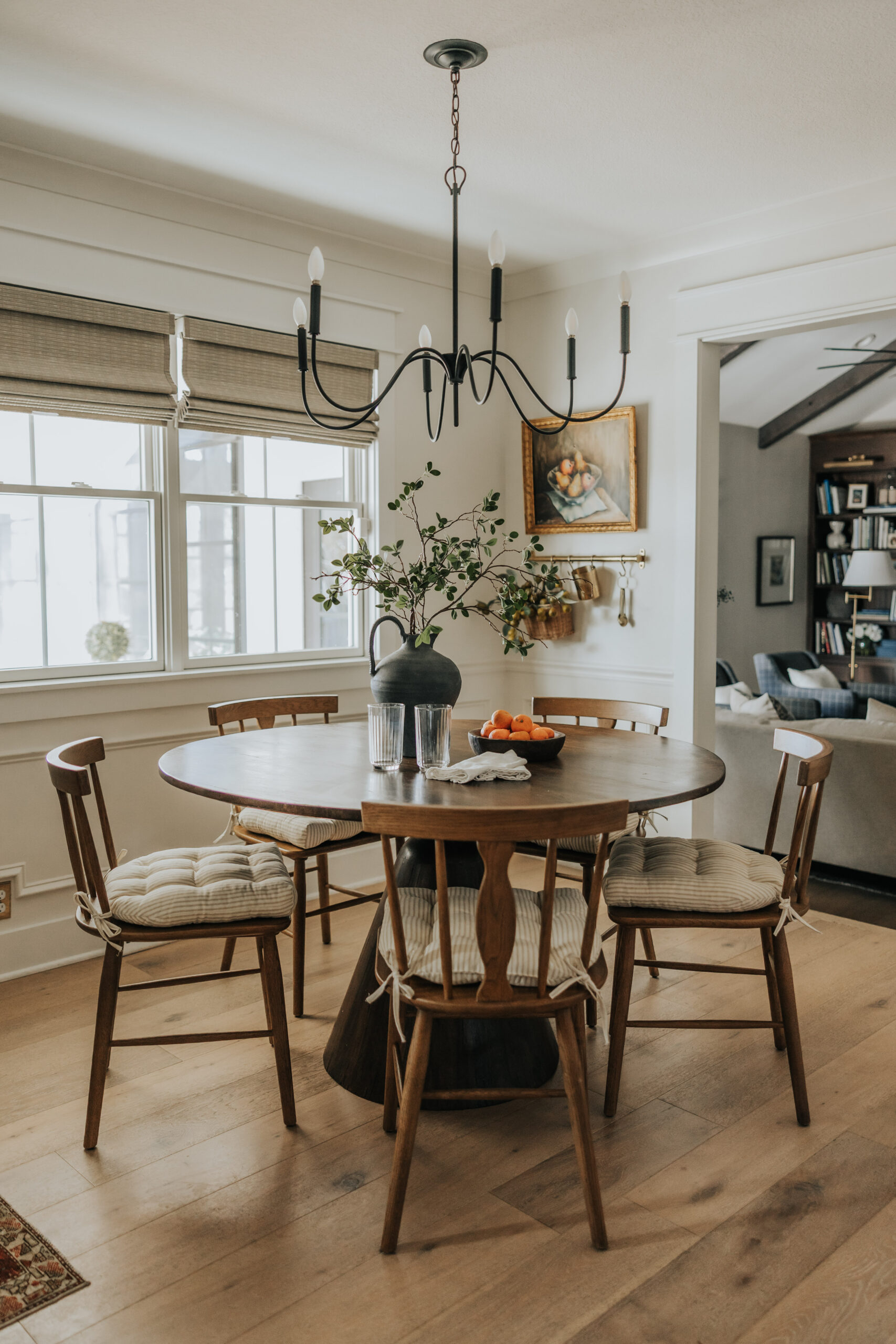
Neither of these is true.
The most timeless, enduring homes are the ones where beauty and function exist together so naturally that you stop noticing the distinction. A sofa that is both gorgeous and comfortable enough to spend a Sunday on. A kitchen island that is both beautifully proportioned and genuinely useful for the way the family cooks. A mudroom that handles the chaos of daily life while still feeling like a considered, lovely space.
This is the standard of a beautiful and functional home — and it is absolutely achievable when you approach design with the right intentions from the beginning.
Beauty and function belong together — the most timeless interiors never sacrifice one for the other.
Start with the How
There is a particular kind of home that stops you the moment you walk in. It’s beautiful — genuinely, quietly beautiful — but it doesn’t feel precious. It feels lived in. Comfortable. Like you could set down your bag, sink into the sofa, and stay a while without worrying about disturbing anything.
This is the heart of livable home design. Not rooms that look beautiful in photographs but feel impossible to actually inhabit. Not spaces so carefully styled that real life feels like an intrusion. But homes that are designed with equal parts beauty and intention — where every decision serves both the eye and the life being lived inside it.
This is what I think about in every project I take on. How do we create something that is genuinely lovely and genuinely functional? How do we design rooms that work as hard as they look good — that hold a family, absorb the rhythms of daily life, and still feel beautiful at the end of a long day?
The answer lies in a set of timeless principles that have nothing to do with trends and everything to do with intention. Let me walk you through them.
Beauty and Function Are Not opposites
The first and most important principle of functional cottage interiors is this: beauty and function were never meant to be in conflict.
Somewhere along the way, we absorbed the idea that a truly beautiful room is one that isn’t really used — a formal living room no one sits in, a dining room reserved for holidays, a bedroom styled so carefully it feels more like a hotel than a sanctuary. And on the other side, we accepted that truly functional spaces have to sacrifice beauty — that a family home means giving up the aesthetic you love in exchange for practicality.
Space Will Actually Be Lived In
Every truly functional home design decision begins with the same question: how will this space actually be used?
Not how it will be photographed. Not how it will look on a mood board. But how real people — your family, your life, your rhythms — will move through and inhabit it every single day.
Think about traffic flow first: Before a single piece of furniture is chosen, understand how people move through the space. Where do they enter? Where do they naturally gather? Where does the morning routine happen, and where does the evening wind down? Furniture placement that works with natural traffic flow rather than against it makes a room feel immediately more comfortable and livable.
Design for your actual life: A transitional family cottage with young children needs different things than a quiet home for empty nesters — and both can be equally beautiful. The key is honesty about how the space will truly be used. Durable, washable fabrics. Surfaces that can handle daily life. Storage that works for real people. These aren’t compromises — they’re the foundations of real-life cottage design done well.
Plan for the moments that matter most: Think about the specific moments that happen in a room — morning coffee, homework at the kitchen table, evenings gathered in the living room. Design the space to support those moments beautifully, and the room will feel right in a way that’s hard to articulate but impossible to miss.
Functional design starts with honesty about how a space will truly be lived in — design for real life, and beauty will follow naturally.
Choose Furniture That Works as Hard as It Looks Good
Furniture is where the elegant functional home either comes together or falls apart. And the difference almost always comes down to choosing pieces that are both genuinely beautiful and genuinely built for daily life.
Prioritize quality construction: Beautiful furniture that falls apart after two years isn’t functional — it’s expensive and disappointing. In timeless home design, quality construction is non-negotiable. Solid frames, durable joinery, fabrics and finishes that age gracefully rather than showing every moment of use.
Choose appropriate scale: Furniture that is too large makes a room feel crowded and hard to move through. Furniture that is too small feels insignificant and fails to anchor the space. Scale is one of the most overlooked elements of livable home design — and getting it right makes every other decision easier.
Consider performance fabrics: Performance fabrics have come a long way. Many of today’s options are virtually indistinguishable from natural linens and wovens, but they clean easily and hold up beautifully to daily use. In a family home especially, choosing performance fabrics in the right tones and textures means you never have to choose between the sofa you love and the sofa that works.
Look for pieces with dual purpose: An ottoman that doubles as a coffee table. A bench at the foot of the bed that provides both seating and storage. A console that anchors an entryway while holding the everyday items that need a home. Pieces that serve more than one purpose are the quiet workhorses of intentional home design.
Furniture that is both beautiful and built for real life is the foundation of a home that feels elegant and livable in equal measure.
Build in Storage That Disappears into the Design
One of the most consistent challenges in functional home design is storage — and one of the most common mistakes is treating it as an afterthought.
Storage that is added after the fact tends to feel utilitarian and out of place. Storage that is designed in from the beginning feels like a natural, beautiful part of the home — and makes daily life infinitely more comfortable.
Think about storage in every room: Every room has things that need a home — remotes, throws, books, toys, daily essentials. Rather than letting these accumulate on surfaces, design dedicated storage into each space from the beginning. Built-ins, baskets, lidded boxes, ottomans with storage — these solutions keep surfaces calm and rooms feeling collected.
Choose storage that is also beautiful: Storage doesn’t have to be hidden to be functional. A row of beautiful baskets on a lower shelf, a set of lidded ceramic canisters on a kitchen counter, a set of linen boxes on a closet shelf — these are storage solutions that contribute to the aesthetic of the space rather than detracting from it.
Edit regularly: Even the best storage systems become overwhelmed when they’re asked to hold too much. Regular editing — removing what is no longer needed, returning things to their designated homes — is as much a part of functional home design as the storage itself.
Storage designed in from the beginning keeps rooms feeling calm, collected, and genuinely livable — not just for the first week, but for years.
Layer in Warmth Without Sacrificing Function
A home that is purely functional without warmth feels institutional. A home that is purely warm without function feels chaotic. The sweet spot — and the hallmark of designer livable design — is a space that is both deeply warm and deeply practical.
Choose natural materials that age beautifully: Wood, linen, stone, ceramic, wool — these natural materials bring warmth and texture while also being durable and timeless. They develop patina rather than showing wear. They feel better with age rather than worse. In an elegant functional home, natural materials do double duty — they are as practical as they are beautiful.
Layer textiles thoughtfully: Textiles are the fastest way to bring warmth into a functional space. A durable linen sofa, a washable cotton rug, linen curtains that filter light softly — these textiles bring warmth and comfort while still being designed for real life. Choose natural fibers in warm, soft tones and your rooms will feel both inviting and livable.
Include lighting that creates atmosphere: Overhead lighting alone makes a room feel flat and functional in the wrong way. Layered lighting — table lamps, floor lamps, sconces — creates warmth, dimension, and atmosphere. It transforms a room from a space that is merely functional to one that feels genuinely beautiful at every hour of the day.
Warmth and function belong together — natural materials, layered textiles, and thoughtful lighting create rooms that feel as good as they look.
Design for Timelessness, Not Trends
Perhaps the most important principle of intentional home design is this: design for the long term.
Trends come and go quickly. What feels fresh and current today can feel dated within a few years — and a home designed entirely around a trend requires constant updating to stay relevant. But a home designed around timeless principles — quality, proportion, natural materials, a warm and cohesive palette — remains beautiful and relevant for decades.
Invest in the classics: Classic furniture forms, timeless finishes, enduring materials — these are the investments that pay off over time. A beautifully made sofa in a warm neutral linen. A solid wood dining table with honest joinery. Stone countertops that develop character with age. These pieces become more beautiful over time rather than less.
Let your palette be your constant: A warm, cohesive color palette — built around soft neutrals, natural tones, and organic warmth — is the invisible thread that ties a home together across rooms and over time. Trends can come and go in the accessories and accents, but a timeless palette keeps the home feeling collected and cohesive regardless of what else changes.
Choose character over perfection: The most timeless homes aren’t perfect — they’re characterful. They have worn edges and patinated finishes and collected objects that tell a story. Real-life cottage design embraces the beauty of imperfection — the antique find beside the new piece, the worn rug that has absorbed years of family life, the walls that hold the history of a home.
Timeless design outlasts every trend — invest in quality, proportion, and natural materials, and your home will feel beautiful for decades.
The Home That Holds You
A truly functional home doesn’t just work well. It holds you. It absorbs the fullness of daily life — the busy mornings, the quiet evenings, the gatherings and the ordinary Tuesdays — and remains beautiful through all of it.
This is what intentional home design makes possible. Not a home that has to be protected from real life, but one that is designed to welcome it. Not a home that looks beautiful in spite of being lived in, but one that becomes more beautiful because of it.
The principles here aren’t complicated. Design for how you actually live. Choose furniture that works as hard as it looks. Build in storage from the beginning. Layer in warmth with natural materials and thoughtful lighting. And design for the long term rather than the moment.
Do these things with intention, and you will create something rare — a home that is genuinely lovely and genuinely livable. A home that is both beautiful and functional in the truest, most timeless sense.
Ready to create a home that is as beautiful as it is livable? Head to my LTK for the furniture, textiles, lighting, and accessories that bring timeless, functional cottage design to life.