


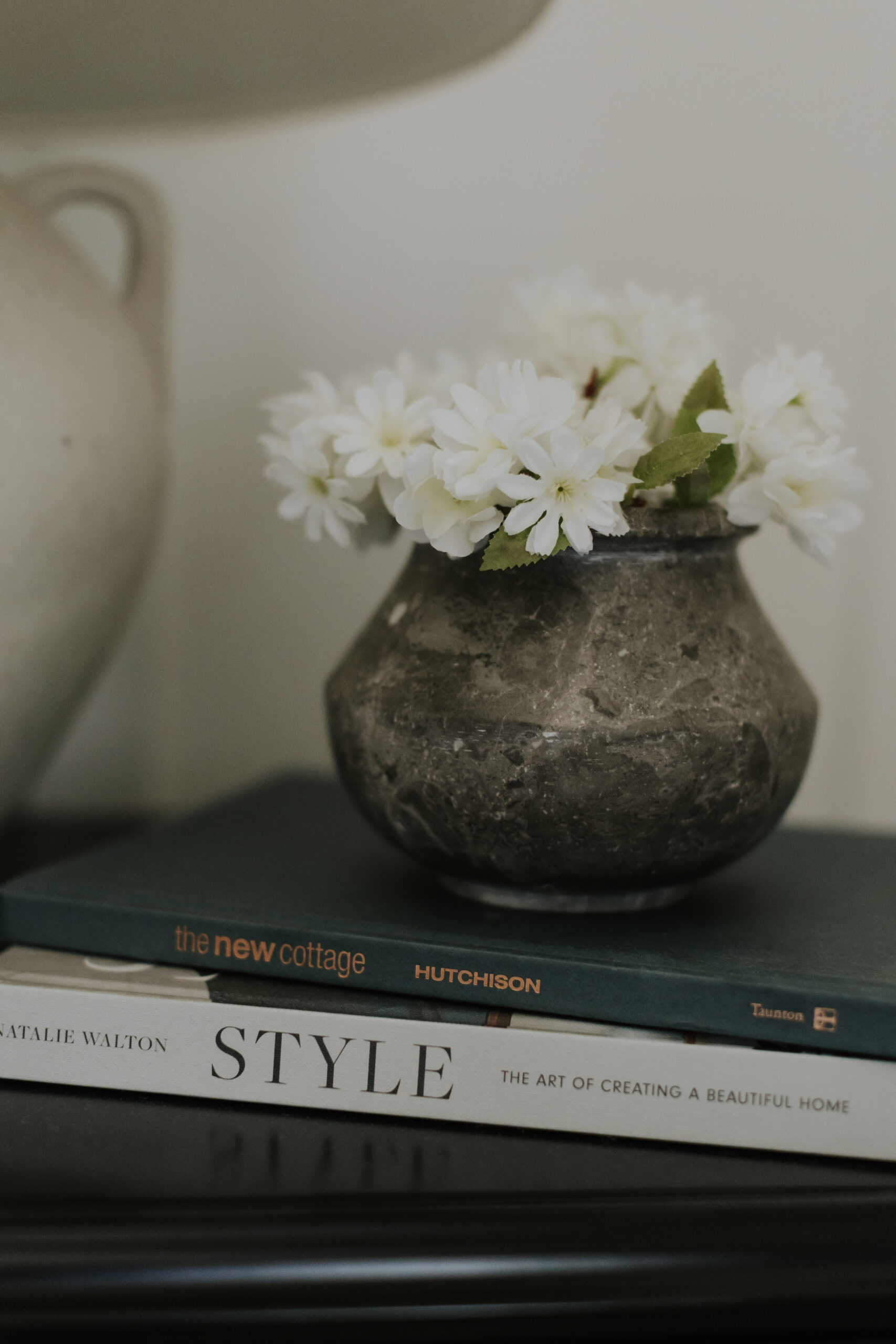
We live in a world that celebrates more. More decor, more accessories, more layers, more things displayed and styled and curated. And while there is genuine beauty in a collected, layered home, there is an equally powerful beauty in the spaces between things. In the empty corner. In the cleared surface. In the shelf with just one beautiful object sitting quietly against the wall.
This is negative space — and it might be the most underused design tool available to us.
Negative space isn’t emptiness for the sake of minimalism. It isn’t about stripping your home of personality or warmth or the things you love. It’s about understanding that the space around beautiful things is what allows them to be truly seen. That rest — visual rest — is what makes a room feel calm, intentional, and deeply livable. Like a cozy cottage that breathes.
The homes that stop us in our tracks, the ones that feel both beautiful and peaceful, almost always have this quality. Not because they have less, but because what they have has room to exist. Room to be noticed. Room to matter.
Let me show you how to bring that quality into your own home — intentionally, practically, and without losing any of the warmth and personality that makes it yours.
Understanding Why We Resist Empty Space
Before we talk about how to use negative space, it’s worth talking honestly about why most of us don’t.
Filling space feels productive. It feels like decorating. An empty surface can feel unfinished, like something is missing, like you haven’t quite gotten there yet. And so we add — another candle, another frame, another small object — until every surface is spoken for and the room starts to feel busy without quite knowing why.
There’s also a fear that empty space will feel cold or impersonal. That a cleared shelf will look sparse. That a surface with only one or two objects will look like you forgot to finish styling it.
But here’s what’s actually true: visual clutter is exhausting. Even when we can’t name it, our eyes and minds work harder in rooms where there is no place to rest. The busyness accumulates quietly, and what started as cozy and collected slowly tips into overwhelming.
Negative space is the antidote. It’s the exhale after the inhale. And learning to use it intentionally is one of the most transformative things you can do for your home.
We resist empty space because it feels unfinished — but negative space is what gives a room room to breathe.
What Negative Space Actually Does for a Room
Negative space isn’t passive. It’s doing something specific and important every time you use it well.
It makes beautiful things more beautiful: When an object has space around it, your eye goes directly to it. A single ceramic vase on a cleared shelf commands attention in a way it never could when surrounded by eight other objects competing for the same gaze. Negative space is what turns a pretty object into a focal point.
It creates calm: Rooms with visual breathing room feel peaceful. Not empty — peaceful. There is a quietness that settles over a space when surfaces aren’t crowded and shelves aren’t overflowing. That calm is what makes a home feel restorative — a place you genuinely want to return to at the end of a long day.
It gives the eye somewhere to rest: In a fully decorated room with no negative space, the eye moves constantly, looking for somewhere to land. In a room with intentional breathing room, the eye moves naturally through the space, pausing at the beautiful moments, resting in the quiet ones. This rhythm is what creates the feeling of ease.
It makes the room feel larger: Empty space reads as space. A cleared counter, a shelf with room between objects, an open corner — these moments make rooms feel bigger and more open, even when the square footage hasn’t changed.
Negative space makes beautiful things more visible, creates calm, and gives the eye the rest it craves.
Start with Your Surfaces
The most immediate place to practice negative space is on your surfaces — counters, coffee tables, consoles, side tables, and shelves. These are the spaces most prone to accumulation and the ones where intentional editing makes the fastest, most visible difference.
The one-third rule: As a starting point, aim to leave at least one-third of any surface completely clear. If your coffee table has three distinct zones, let one of them breathe. If your console has room for six objects, consider styling three and leaving the rest as open space. This isn’t a rigid formula — it’s a starting point for training your eye.
Clear the everyday clutter first: Before you can assess what belongs on a surface, remove everything that has accumulated out of habit rather than intention — the stack of mail, the random objects that landed and stayed, the things that don’t have a better home yet. What remains after that edit is much easier to evaluate and arrange with intention.
Ask what the surface needs, not what it can hold: A surface can hold a lot. But what does it need? A coffee table needs one or two anchoring moments — a tray with a few objects, a stack of books, a small vase. It doesn’t need all of those things plus more. Ask what serves the space rather than what fills it.
Start with your surfaces — clear at least one-third of any surface and ask what it needs rather than what it can hold.
Edit Your Shelves with Fresh Eyes
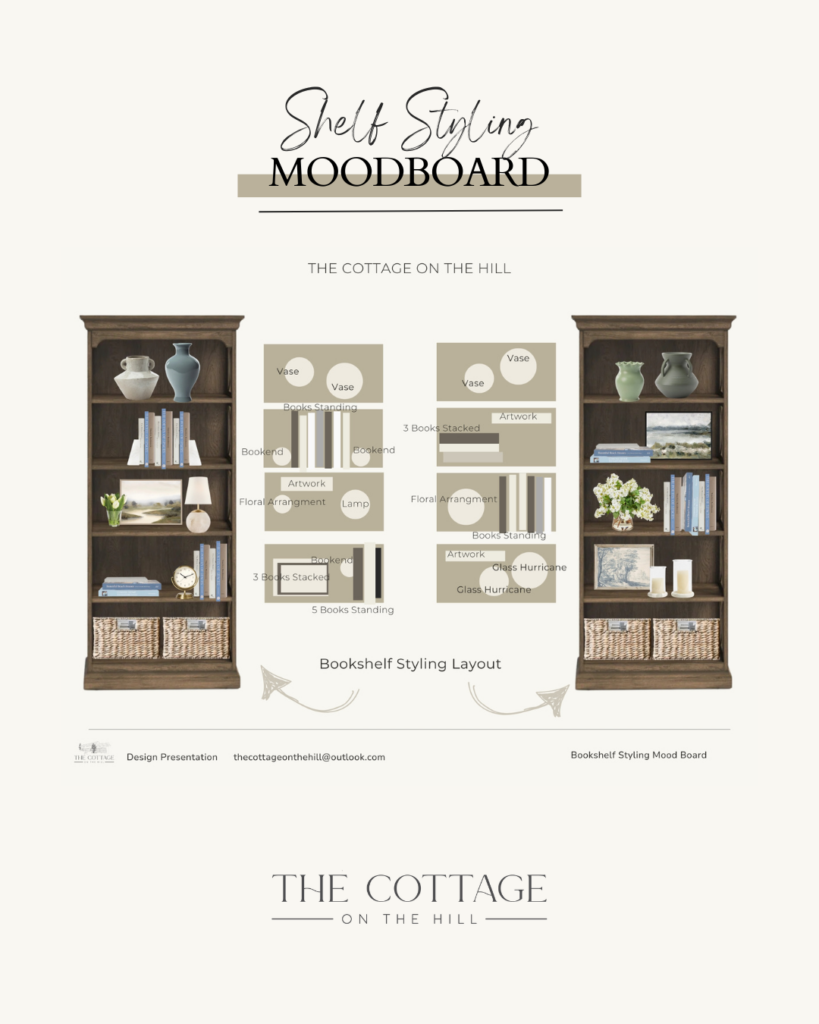
Shelves are where negative space is both most challenging and most rewarding to practice. We tend to fill shelves completely — every inch occupied, every space spoken for — because they feel like they’re meant to be filled. They’re not.
(If you missed our earlier post this month on Styling Shelves with a Collected Feel, that’s a wonderful place to start — it walks you through the full shelf styling process from blank shelf to beautifully layered. Come back here when you’re ready to think about the breathing room within that process.)
Step back and assess: Stand across the room from your shelves and look at them the way a stranger would. Where does your eye go? Is there a place it naturally wants to rest, or does it move restlessly without landing anywhere? If the latter, there’s likely not enough breathing room.
Leave intentional gaps: Between groupings of objects on a shelf, leave deliberate gaps. A cluster of three objects, then open space, then a stack of books, then open space, then a single vase. These gaps aren’t mistakes — they’re the visual punctuation that makes the shelf readable and beautiful.
Let some shelves stay simple: Not every shelf in a bookcase or built-in needs to be fully styled. A shelf with just a few books and a single object can be as striking as a fully layered one — sometimes more so. Let some shelves rest so that the fuller ones feel special.
The single object moment: One of the most beautiful things you can do on a shelf is place a single meaningful object with generous space around it. A beautiful vase. A piece of art leaning against the back. A ceramic bowl sitting quietly on its own. These singular moments draw the eye and feel deeply intentional — like someone placed that object there with great care, because they did.
Leave intentional gaps between shelf groupings and let some shelves stay simple — negative space on shelves creates rhythm and makes beautiful objects truly visible.
Apply It Room by Room
Negative space looks different depending on the room and how that space is used — but the principle applies everywhere.
Living room: The coffee table and side tables are the most common places where clutter accumulates. Edit down to the essentials — a tray with two or three objects, a single stack of books, a small vase of stems. Let the sofa and chairs breathe by not over-pillowing. Leave one corner of the room open rather than filling it with a plant or accent table.
Kitchen: Counter space is precious and hard-won. The more you can clear, the larger and calmer your kitchen will feel. Keep only what is truly used daily on the counter. Display a few beautiful objects — a ceramic vase, a cookbook propped open, a small plant — and let everything else live in a cabinet. The negative space between those moments is what makes the kitchen feel considered rather than cluttered.
Bedroom: The bedroom especially benefits from negative space because it’s the room most connected to rest and restoration. Clear bedside tables down to the true essentials — a lamp, a book, a small plant or candle. Let the bed itself be the focal point by keeping surrounding surfaces calm and quiet.
Entryway: A cleared entry surface — a console with just a tray, a single vase, and open space — signals welcome and calm the moment you walk through the door. Resist the accumulation that naturally happens here and edit it back regularly.
Every room benefits from negative space — apply it most generously in the rooms most connected to rest and restoration.
The Art of the Intentional Object
When you create negative space, the objects you choose to keep become more important — and more visible. This is actually a gift.
It invites you to be more thoughtful about what earns a place in your home. Not everything that is pretty deserves a spot on your shelf or your surface. The things that remain when you’ve edited with intention should be things that genuinely matter — beautiful, meaningful, or both.
Choose objects with soul: A handmade ceramic, a vase collected on a meaningful trip, a piece of art that moves you, a book you actually love — these objects bring life to a space in a way that generic filler objects simply cannot. When they have room to breathe, their soul is visible.
Let one thing be enough: There is a particular confidence in placing one beautiful object on a surface and leaving it there alone. It says: this is enough. This is beautiful. This deserves to be seen. That confidence — that willingness to let one thing be enough — is at the heart of intentional design.
Rotate rather than accumulate: Instead of adding new objects to an already full space, practice rotating. Put some things away and bring others out. This keeps your home feeling fresh and intentional without the visual weight of constant accumulation.
The objects you keep when you’ve edited with intention become more meaningful — choose things with soul and let one beautiful thing be enough.
Permission to Leave Things Empty
Perhaps the most important thing this blog can offer you is simple permission.
Permission to leave the corner empty. To clear the counter completely. To put only one object on the shelf and call it done. To resist the pull to fill every surface just because it can be filled.
Empty space in a home is not a failure of decorating. It is not a sign that you haven’t finished. It is not coldness or sparseness or lack of personality.
It is breathing room. It is calm. It is the thing that makes everything else in your home more beautiful by giving it space to exist.
The coziest, most collected homes — the ones that feel like a warm exhale the moment you walk in — almost always have this quality. Not because they have less, but because what they have has been chosen with care and given room to be truly seen.
That is the gift of negative space. And it is available to every home, in every room, starting with a single cleared surface and the willingness to leave it that way.
Negative space is permission — to leave things empty, to let one beautiful object be enough, and to trust that breathing room makes everything more beautiful.
Your home doesn’t need more. It needs room to breathe. Start with one surface, one shelf, one corner — and notice what happens when beautiful things finally have space to be seen.
Inspired to create more breathing room in your home? Head to my LTK for the intentional, beautiful objects worth keeping — the ceramics, vessels, art, and accents that earn their place and fill a space with soul.
